
Landscape Speaker Design Considerations
Step 1. What kind of speakers?
The first step is to decide what type of speakers will work best and look the best in your yard.
There are several types:
- Rock Speakers
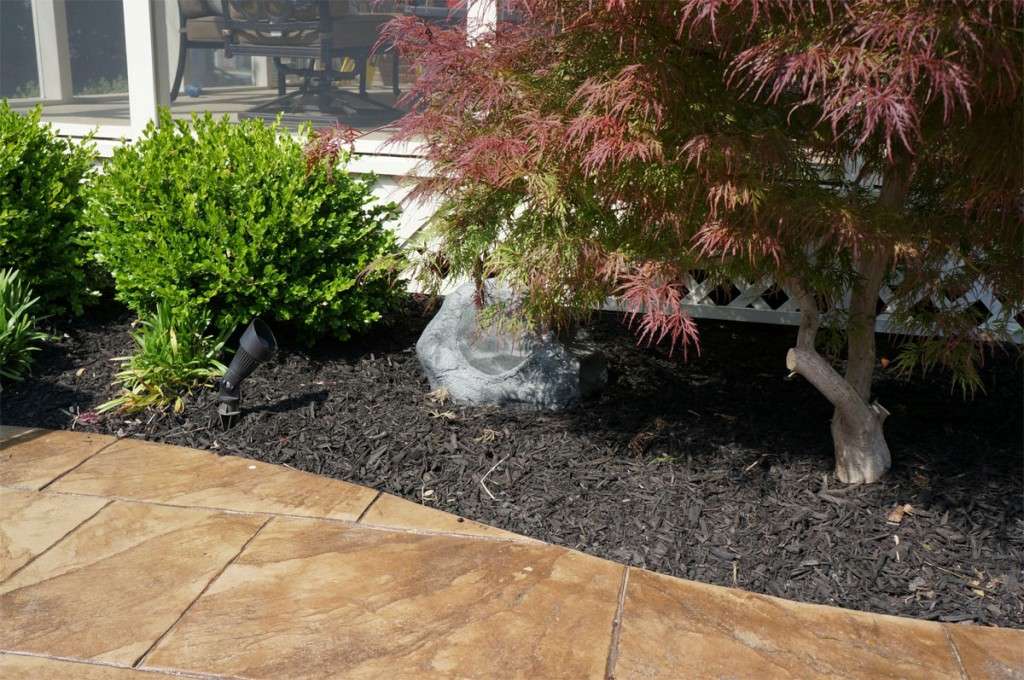 Looks like a rock they come in gray or sandstone. They are great for applications where you need to match a rock wall and are great for medium spaces.
Landscape Speakers
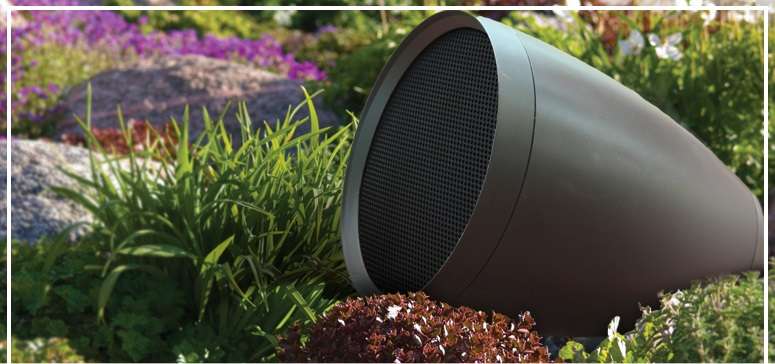 Looks like an outdoor low voltage lighting just a bit larger. Great to hide under bushes or landscape areas. Can add many for very large spaces.
Planter Speakers
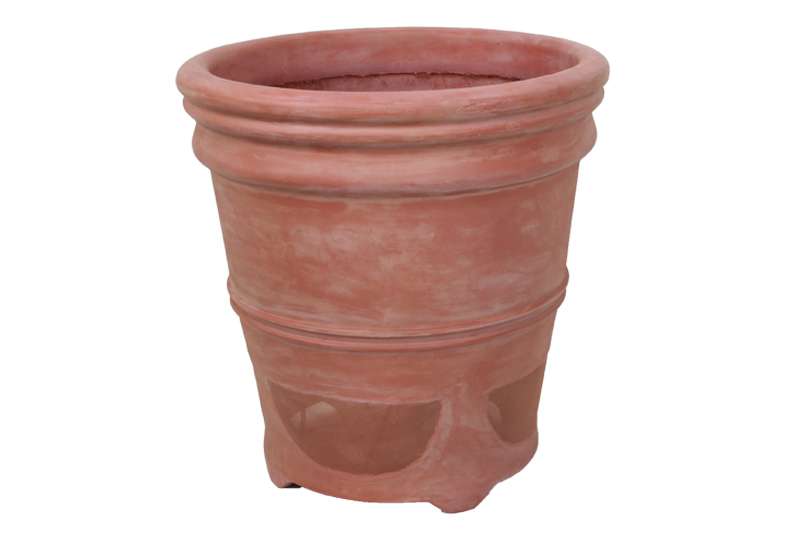 Looks like a planter great for a small deck to blend in with other planters.
Outdoor Speakers
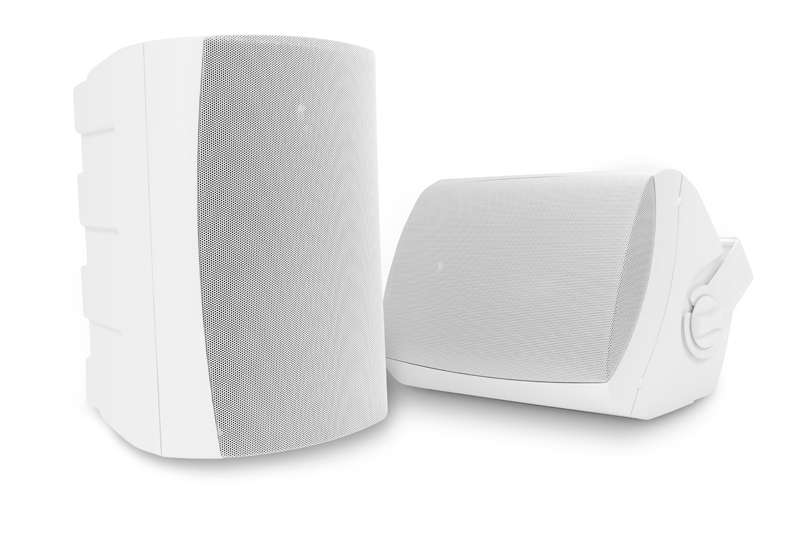 This will be your traditional white or black all weather outdoor speaker. Great coverage best on a building or deck.
Step 2. How large is the space?
The second step is to measure the square footage of the entire listening area. As you’re doing so, keep in mind that you want customers to be close to more than one speaker no matter where they are. This will ensure that audio always sounds evenly dispersed in the background.
Here are some things to note:
- You need at least one speaker for every 300 square feet, but ideally you will have a few more speakers around that area to allow for more consistent volume.
- Four speakers covering 1,200 square feet might do the job on paper, but in reality having a few more speakers placed strategically around the perimeter can make a big difference in sound quality.
Step 3. What’s the layout?
- Is the listening area spread out, or very close together?
- Are you covering a wide open area, or one that is narrow and long?
Episode® Landscape Speakers disperse sound in a 110° radius, meaning you can place each one 25-30 ft. apart to blanket the entire space with even, incredible sound.
When placing speakers consider putting them not only at ground level, but also higher up in trees or on a wall, where they will give the most effective coverage in relation to all listening areas.
The key to even sound dispersion is in the placement of the speakers in relation to one another. You can’t hear speakers that are facing away from you, so be sure to overlap the angles when necessary.
The Basic Design.
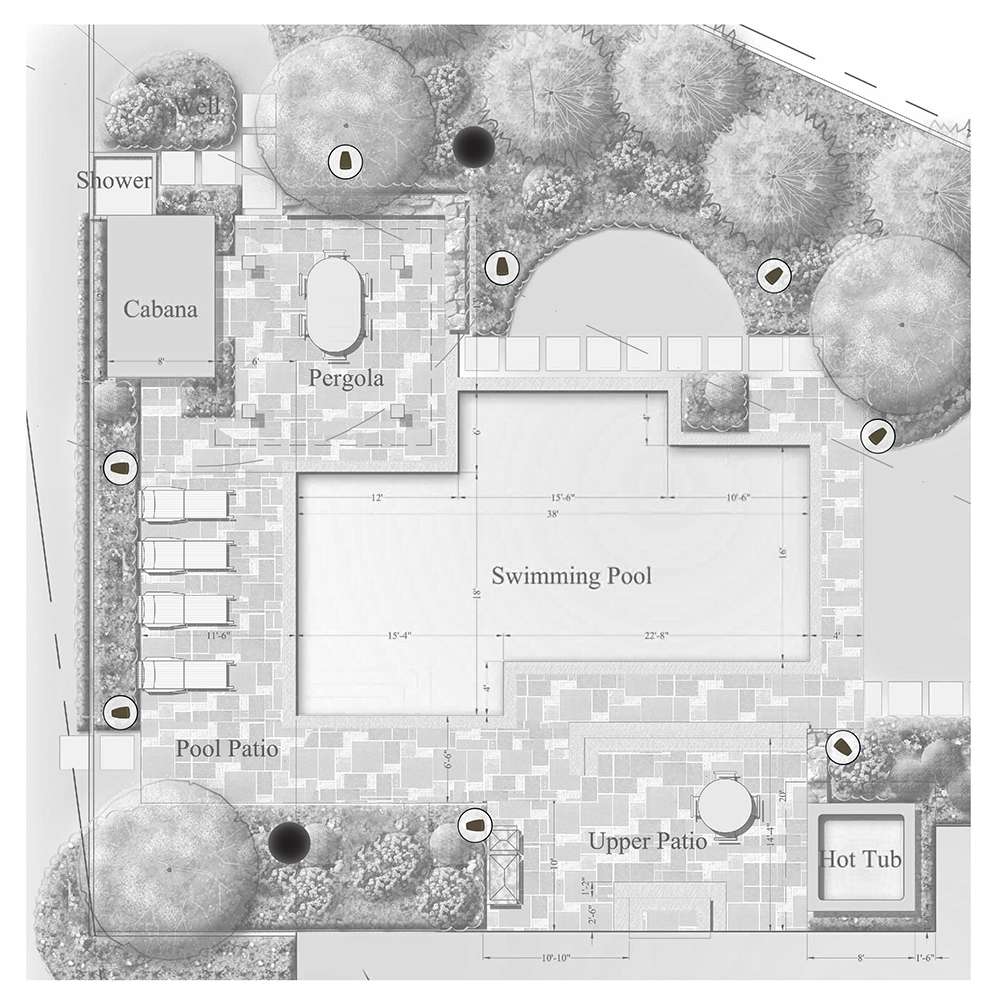
The Rocking Backyard !
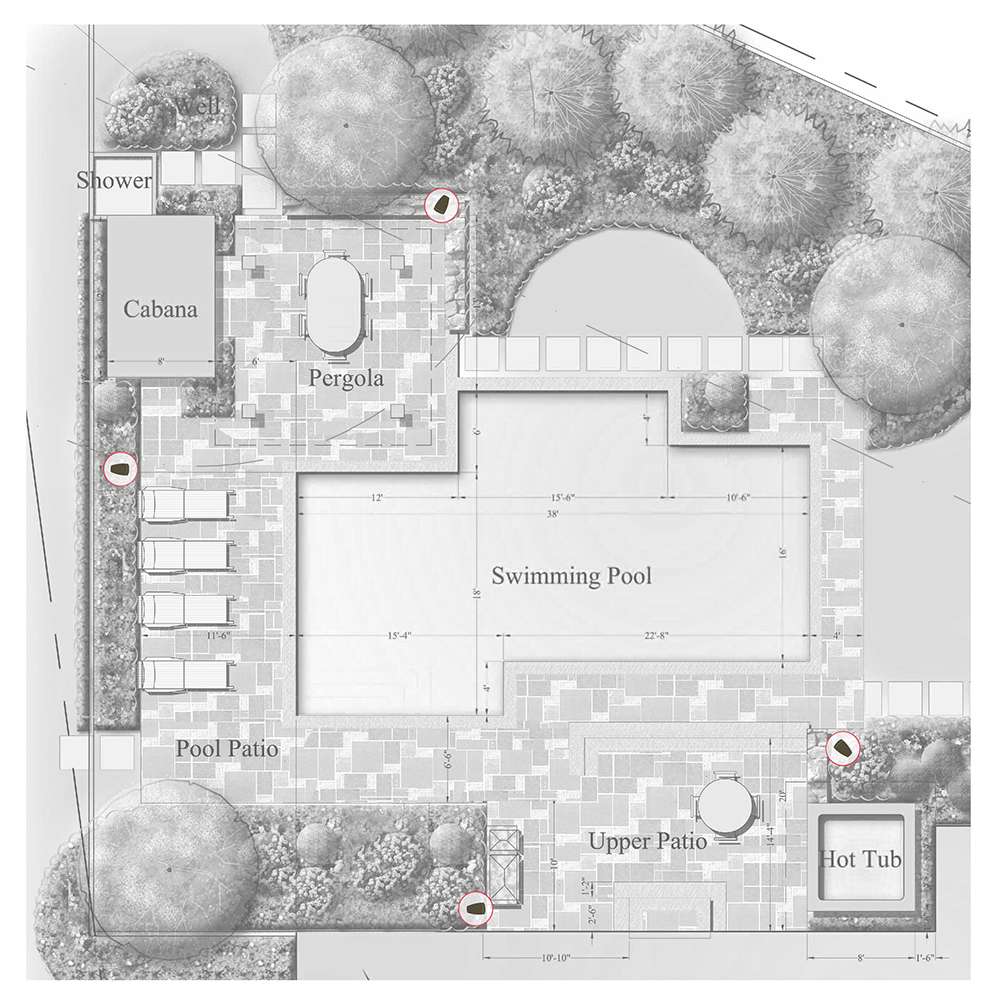
70V Advantages
- Size – best suited for large systems
- Design – fast, easy system design
- Wiring – longer runs over smaller gauge wire
- Scalability – easily add speakers later
- Volume – individual tap settings at each speaker
- Tuning – amplifier DSP to fine tune performance
- Mono Audio -stereo sound isn’t consistent in large areas without twice the number of speakers and amplifiers.
8-Ohm Advantages
- Size – best suited for smaller systems (fewer than 6 speakers)
- Cost – ability to use existing amplifier vs. dedicated 70V amplifier
- Flexibility – can use Powered Zone2 output from an A/V receiver
- Performance – speakers can handle more power, which is ideal when using a few speakers at high volume
- Stereo sound – better sound quality in small listening areas.
If all of this is too much for you or you would like a second opinion please give us a call (973) 945-5275 we would love to be a part of your project!
Common Questions
Do you work in my town?
Yes, if you live in Northern New Jersey. The team works in homes across Morris, Bergen, Essex, Passaic, Somerset, and Hunterdon County.
Do you work on homes that are already built?
Yes. Most visits are in existing homes. We work with what you already have when it still makes sense.
Who started One Sound Choice?
Ryan Herd. He has worked in home technology for more than 30 years. He is a former Mayor of Pequannock, an author, and a TEDx speaker.
How do I get started?
Call or text (973) 945-5275. You can text Ryan a photo first, and he will tell you where he would start.
Clear Advice. Clean Work. Easy to Use.
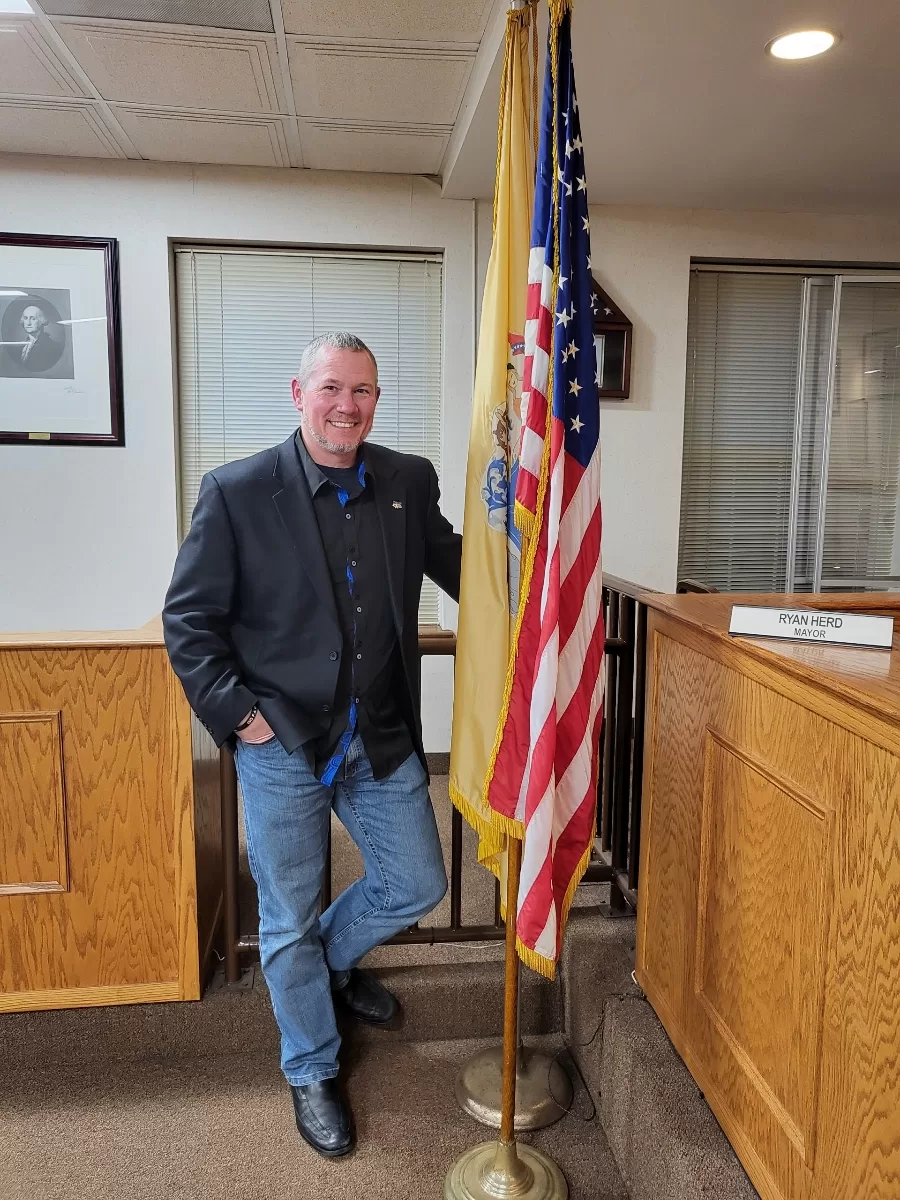
Meet Ryan Herd, Founder of One Sound Choice
Ryan started One Sound Choice more than 30 years ago. He and the team have worked in thousands of New Jersey homes. He is a former Mayor of Pequannock, an author, and a TEDx speaker.
He looks at your house first. Then he tells you what makes sense. More about Ryan
Outdoor Audio in Northern New Jersey
The team here at One Sound Choice works in homes across Morris, Bergen, Essex, Passaic, Somerset, and Hunterdon County.
Start With a Photo
Text Ryan a photo of your backyard. Tell him what bugs you. He will tell you where he would start.
One Sound Choice · 8 Tilley Ave · Pompton Plains, NJ 07444