
The short answer: To see who is on your property after dark, your cameras and outdoor lights need to work as 1 system. Soft, steady light where people walk and park lets each camera show faces and cars in color. Smart alerts tell you when a person or a car shows up, not every time a leaf blows. One Sound Choice designs and installs both together for homes across Northern New Jersey.
Thanksgiving is Thursday, November 26. If you would like this working before your family arrives, call (973) 945-5275 or text (973) 945-5275. Ryan answers his own phone.
In this guide
- Why is it hard to see your property after dark right now?
- What does it mean for cameras and lights to work as 1 system?
- Why do cameras show grainy black and white video at night?
- Where should outdoor lights go so cameras can see faces?
- How do you stop alerts from deer, leaves and headlights?
- Should outdoor cameras be wired or Wi-Fi?
- Where should cameras go on a Northern New Jersey property?
- What happens when a car pulls in at night?
- Will it look good, and will the neighbors mind?
- Can you keep the cameras and lights you already have?
- What can be ready before Thanksgiving?
- What do One Sound Choice clients say?
- Questions families ask
- Meet Ryan
Why is it hard to see your property after dark right now?
Because it gets dark so early, and most yards were never planned for the dark. Many people leave for work early and come home after sunset, so they hardly see their own yard in daylight on a weekday.
The clocks went back on November 1. In Newark, the sun set at 4:44 PM on November 9, and on Thanksgiving Day it sets at 4:31 PM. That means guests will pull into your driveway in the dark, and the kids will be outside in the dark after dinner.
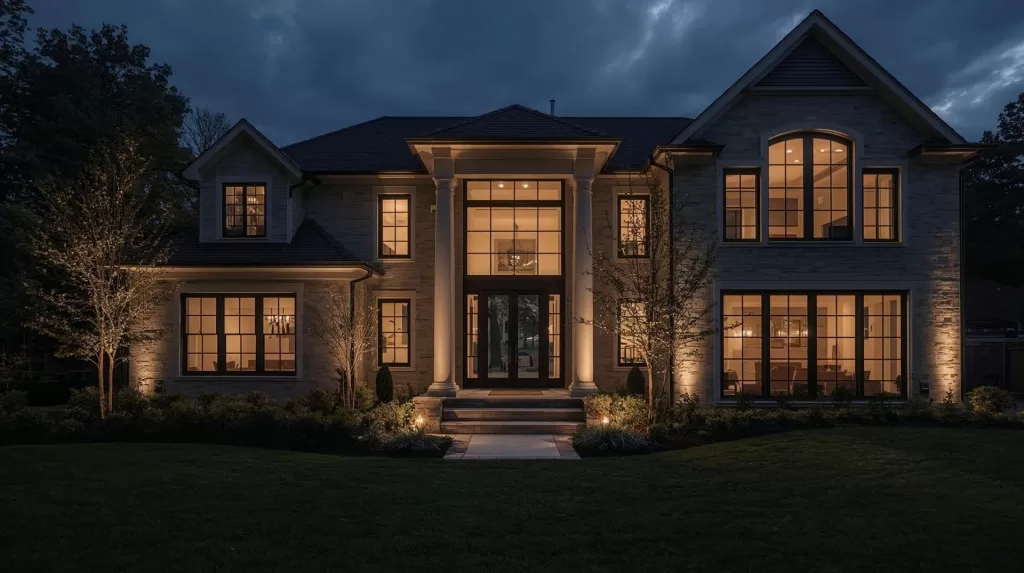
Northern New Jersey adds its own challenges. Many homes sit far back from the road on long driveways. Trees, stone walls and hills make deep shadows. Street lights do not reach the house. In towns like Kinnelon, Franklin Lakes, Mendham and Wyckoff, you can stand at the front door and not see the end of your own driveway at night.
Deer, foxes and other animals walk through these yards all night. They set off basic motion lights and simple motion alerts again and again. After a few weeks, many families stop trusting what they see.
What does it mean for cameras and lights to work as 1 system?
It means the lights help the cameras see, and the cameras tell the lights when to come up. You get 1 clear answer to 1 simple question: who is out there?
In many homes, the cameras came from 1 store, the lights from another and the alerts from a third app. They do not help each other. A camera may see a person at the side door, while the light by that door stays dark. You end up with a blurry clip and a phone full of alerts.
When we build it as 1 system, here is what changes:
- Light is planned for the camera. Each camera looks at a place that already has soft, steady light, so it can show color and detail.
- Lights respond to people, not leaves. When the camera system sees a person or a car, the lights near them can come up brighter and stay up while they are there.
- Alerts are calm and useful. You get a short alert with a clear picture when a person or a car arrives, not dozens of alerts a night.
- Everything lives in 1 app. Anyone in the family can open the same app, look at a camera and turn on the lights.
The tools exist to do this well. FX Luminaire says its Luxor controller handles zoning, dimming and up to 30,000 colors with up to 40 themes, and works with Control4, Lutron, Crestron and Savant. On the camera side, Snap One says Luma x20 recorders can sort events into people, vehicles and things like bikes, and show those clips inside the Control4 app.
Still, design matters more than brands. The real work is deciding where light goes, where each camera looks and what happens when someone arrives.
Why do cameras show grainy black and white video at night?
Because the yard is too dark for the camera to see in color. When light drops, most cameras switch to infrared night mode. Infrared can show that something moved, but it shows the world in black and white, and faces often turn into a gray blur.
Infrared has other problems that many homeowners run into:
- It bounces. The camera’s own infrared light can reflect off a nearby wall, a gutter, the roof edge or even a spider web, and flood the picture with white.
- It fades with distance. Small built-in infrared lights only reach so far. Past that, the yard goes black.
- Rain and dew show up. On a damp night, drops on the lens glow in infrared and hide what is behind them.
Light coming toward the lens is the other big problem. Google Nest’s camera placement guide warns that when a light shines toward the camera, people can look dark or blacked out. It gives the example of a porch light shining into the camera. The same guide says a camera sees best at head height or a little higher, angled slightly down, and that an adult should be no more than 6 meters, about 20 feet, from the camera to get good detail.
So the camera is often not the real problem. The light around it is.
Where should outdoor lights go so cameras can see faces?
Light the person, not the camera. The light should fall on the driveway, the walk and the doors, coming from about the same direction the camera is looking, but never shining into the lens.
A single bright flood light over the garage is what most homes have. It looks bright to you, but it makes a hard pool of light with deep shadows around it. A camera next to it gets a face that is lit from straight above, with the eyes in shadow. A camera across from it gets glare.
Layered light works better. Here is how we usually think about it:
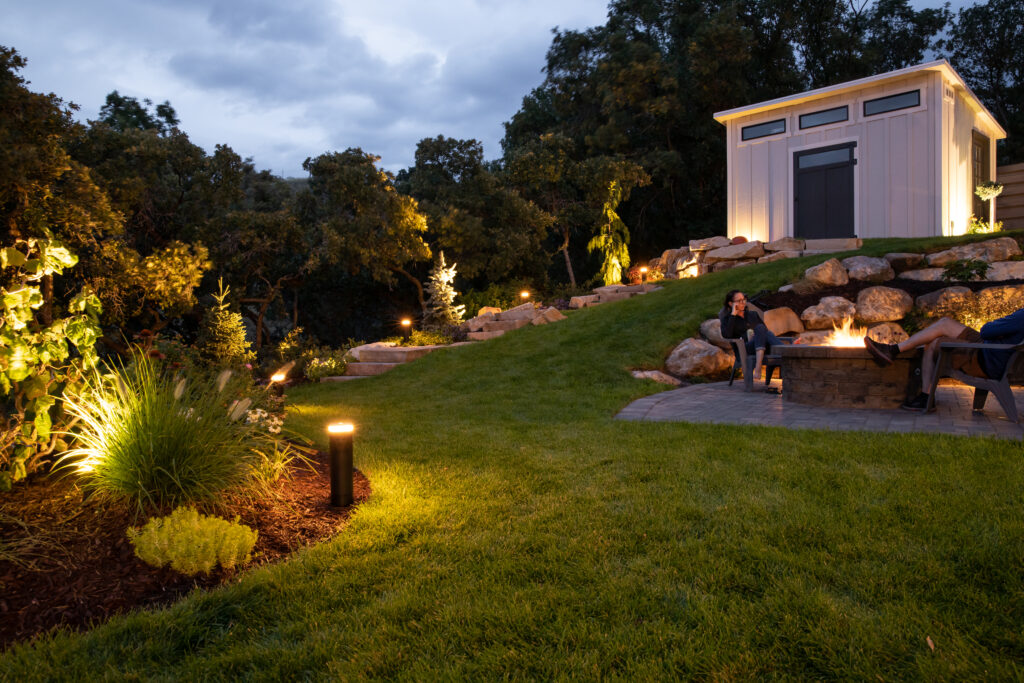
- Path and step lights keep the ground lit so nobody trips and the camera sees feet and legs clearly.
- Soft wall and entry lights light faces at the front door, side door and garage, from the side, not straight down.
- Driveway lights show the car and the place where it stops, which is where people get out and look up.
- Tree and wall lights fill the dark pockets between the house and the street, so the yard does not turn into a black wall past the porch.
Good outdoor light is also gentle. DarkSky and the Illuminating Engineering Society share 5 simple principles for outdoor lighting: use light only where it has a purpose, aim it down where it is needed, keep it no brighter than necessary, use timers or motion to control it, and choose warmer colors. Those rules fit cameras well, too. Steady, low light is easier for a camera than harsh light that snaps on and off.
There is a tradeoff here. Very warm, very dim light looks lovely but gives the camera less to work with. Very bright, cool light helps the camera but looks harsh and bothers the neighbors. We tune the brightness and color for each area, and we check the camera picture at night before we call it done.
If outdoor lighting is the part you care about most, read our post on why a beautiful house can fall flat at night, or see our FX Luminaire outdoor lighting page.
Want to know what your cameras can really see at night? call (973) 945-5275 or text (973) 945-5275. You can also read how we plan cameras and lighting after dark.
How do you stop alerts from deer, leaves and headlights?
Only send alerts for people and cars, in the places that matter. Basic motion alerts cannot tell a deer from a guest, so they buzz all night, and people learn to ignore them.
Homeowners say the same things online again and again. Bugs set off the flood lights. Branches move in the wind. Headlights sweep across the lawn. Rain and snow look like motion. When your phone buzzes all night, you stop looking, and then you miss the 1 alert that matters.
Here is how we keep alerts calm and useful:
- People and vehicle detection. We use cameras and recorders that can tell a person or a car from other motion, and we turn off plain motion alerts.
- Zones. We draw zones around the driveway, walks and doors. The trees and the road are left out, so a deer at the edge of the woods does not wake you up.
- Lines. On a long driveway, we can set a line that a car has to cross before you get an alert, so cars turning around at the end of the street do not count.
- Schedules. You may want an alert when someone comes to the back door at 2 AM, but not every time the kids come in from the yard at 6 PM.
The tradeoff is that no system is perfect. A big dog or a person far away in the rain can still fool a camera now and then. We test after dark and fine-tune in the first weeks, because a few honest alerts are better than dozens of false ones.
Should outdoor cameras be wired or Wi-Fi?
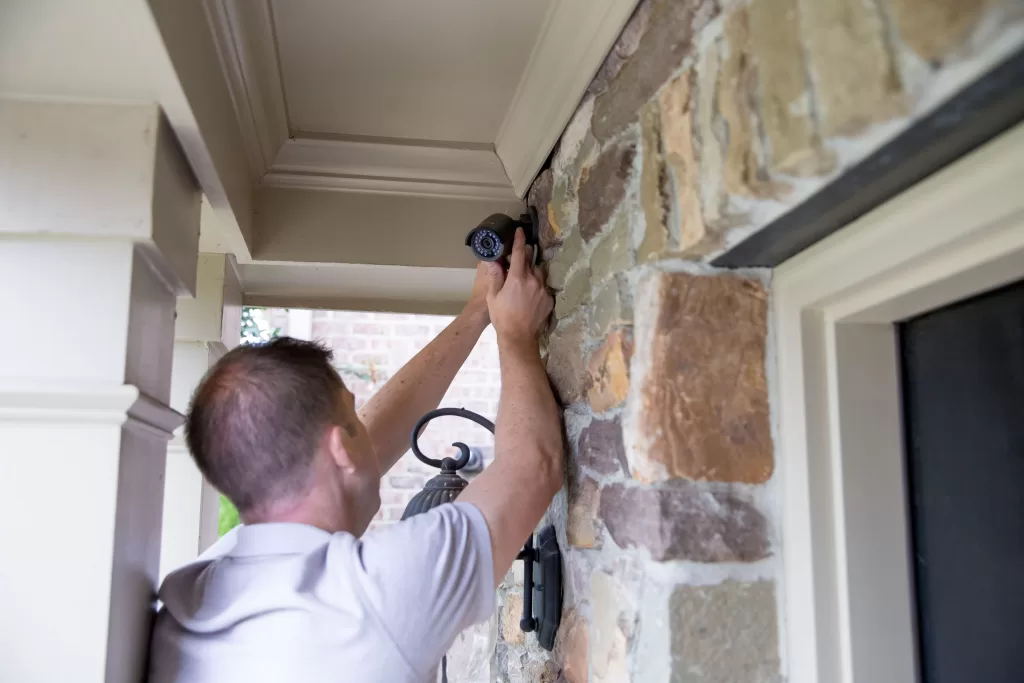
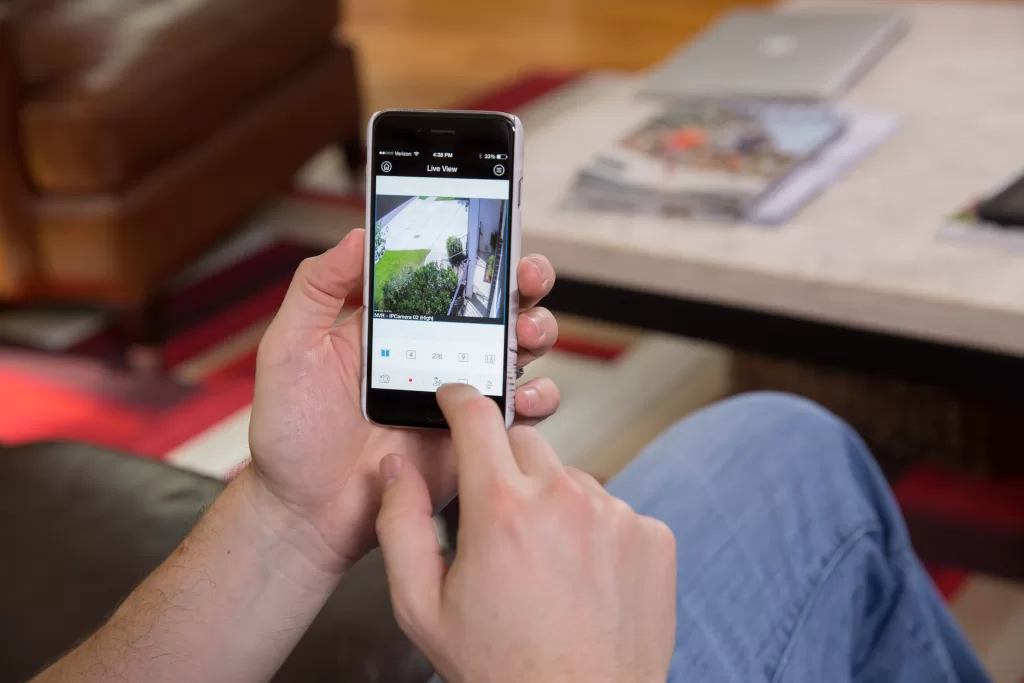
Wired, whenever we can. A single network cable can carry both power and video to a camera. That means no batteries to charge and no Wi-Fi signal to lose at the far end of the driveway.
Battery cameras are easy to put up, which is why so many homes have them. The catch is that they sleep to save power, so they can wake up late and miss the first few seconds. In the cold, batteries drain faster. And someone has to climb a ladder to charge them.
Wi-Fi cameras do not need batteries, but they need a strong Wi-Fi signal outside. On a big lot, the signal at the garage, the pool house or the end of the driveway is often weak. When the signal drops, the video drops too.
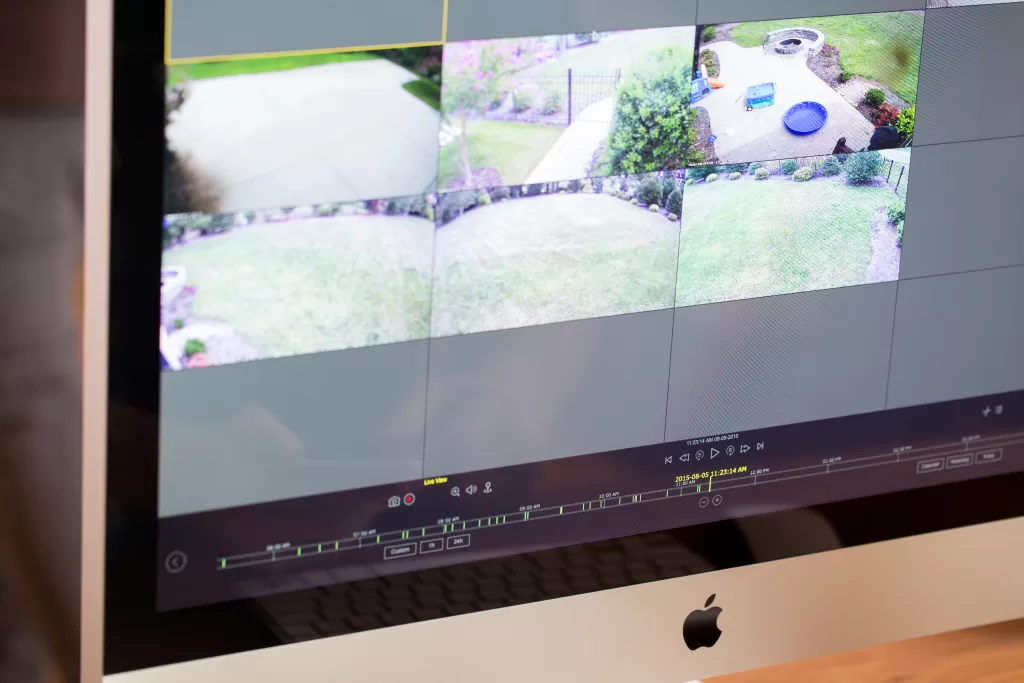
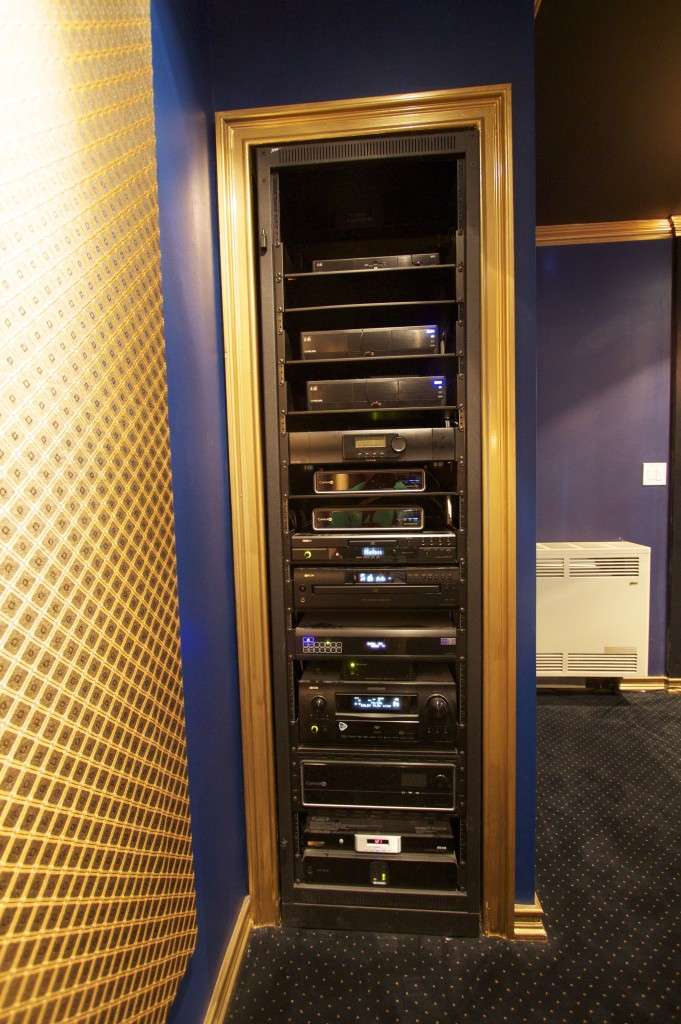
With wired cameras, the video goes to a recorder that sits safely inside the house. We put the recorder and the network gear on battery backup, so a short power blink does not stop the recording. On the visit, we explain plainly what stays on and what would stop during a long outage.
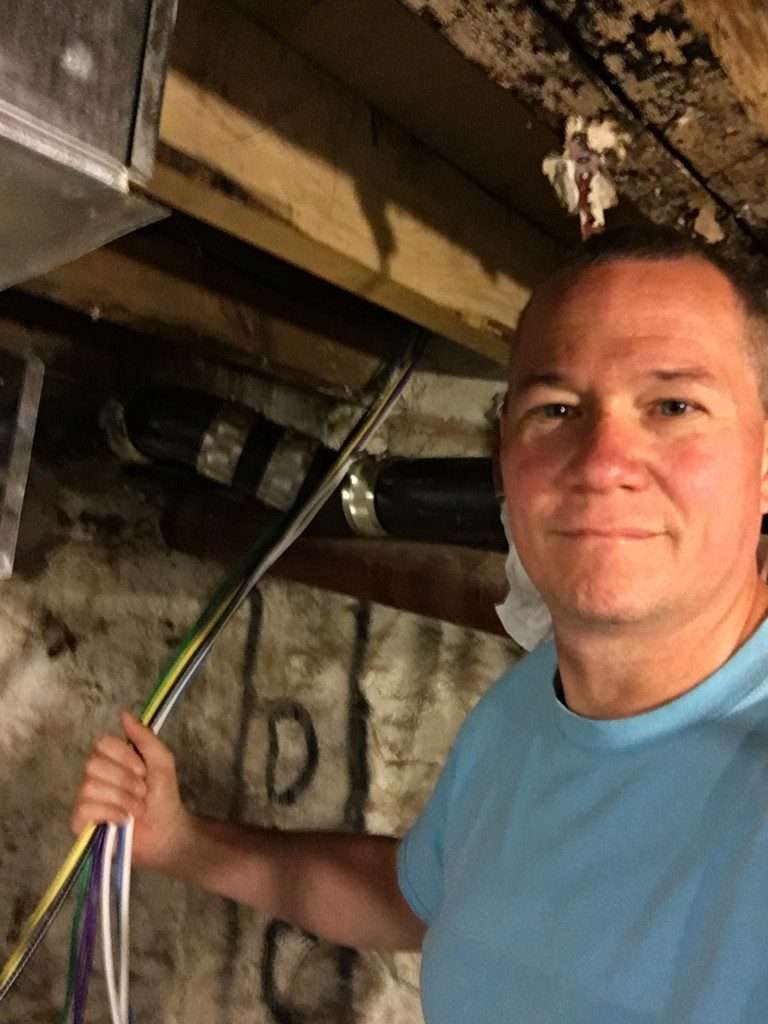
Wiring does take more work. Sometimes it means running cable through an attic, a basement ceiling or a short trench. That is everyday work for us, and we leave the house clean.
Where should cameras go on a Northern New Jersey property?
Put cameras where people actually arrive: the end of the driveway, the place where cars stop, the front door, the garage, the back patio and any side gate. In most homes, fewer cameras in the right places work better than many cameras in random places.
We walk the property the way a guest or a delivery driver would. We start at the street, follow the driveway to the house and note where a car would stop and which doors people really use. Then we look at the back of the house, the pool, the patio and any path from the woods or a neighbor’s yard.
A few rules guide where each camera goes:
- Close enough for detail. A camera that covers the whole front yard from the roof peak sees a lot but shows tiny faces. We use a wide camera for the big picture and a closer camera where faces matter.
- At head height or a little higher. High enough to stay out of reach, low enough to see under a hat brim.
- Away from glare. Not pointed at a porch light, a street light or the setting sun.
- Respectful of neighbors. We aim cameras at your property, not into the house next door.
Each camera then gets a matching light plan. This is the step most homes skip, and it makes the biggest difference.
What happens when a car pulls in at night?
The house greets them, and you know who it is. Here is what an evening can look like once the cameras and lights work together.
At sunset, the path lights, the step lights and the soft lights on the front of the house come on by themselves. The house looks warm and welcoming, and nobody has to remember a switch.
At 6:15 PM, a car turns into the driveway. The driveway camera sees a vehicle cross the line you set. The lights along the drive and at the front door come up a little brighter. Your phone shows a short alert with a clear color picture. It is your sister and her kids, a day early for Thanksgiving. You open the door before they ring.
At 11:30 PM, a deer walks across the back lawn. The camera sees motion, but it is not a person or a car, so nothing buzzes and nobody wakes up.
Later that night, your college student comes home from seeing friends. The garage camera records a clear clip, and the lights by the side door stay up until the door closes. In the morning, you can check that everyone got in, without waiting up.
When you are away, the same app lets you look at every camera and turn on the outside lights with 1 tap.
Will it look good, and will the neighbors mind?
Yes, it looks good, and no, the neighbors should not mind, as long as the light is soft and aimed with care. The goal is a warm, calm home, not a parking lot.
Fixtures can hide in the plants, under the eaves and along the walls, so you see the light and not the hardware. Lights stay low most of the night and get brighter only where someone is moving. Shields and careful aiming keep light out of the neighbors’ windows and out of the night sky.
Because a controller like Luxor can dim and group lights into zones, the same yard can look different for different moments. A soft setting for a quiet weeknight, a brighter one for a party on the patio and a warm holiday look for Thanksgiving week. It all runs on a schedule.
Can you keep the cameras and lights you already have?
Often, part of it. We look at what you have and tell you plainly what can stay and what is holding the system back.
Many families keep good landscape lights and existing wiring, and replace only the cameras that cannot see well at night. Sometimes the lights are fine but need new aiming, new bulbs or a better controller. Sometimes a camera is good, but it is in the wrong place or fighting a porch light.
What we do not do is stack 1 more app on top of 3 others. Anything that stays has to work with the rest of the system.
What can be ready before Thanksgiving?
For most homes, the most important areas can be ready before Thursday, November 26, if we start the conversation now. Here is how Ryan usually plans it:
- Walk the property. Ryan visits, walks from the street to every door and asks how your family comes and goes. When we can, we come back after sunset to see the property in the dark.
- Pick the areas that matter most. Usually the driveway, the front door and the garage come first, because that is where guests arrive.
- Plan light and cameras together. Each camera gets a light plan, and each light gets a purpose.
- Install and test at night. We set the zones and alerts, then check every camera after dark.
- Be honest about timing. If the back of the property needs more time, Ryan will tell you on the visit and finish the arrival areas first.
For a quick look at the whole idea, visit our cameras and lighting after dark page.
Ready to see your whole property clearly after dark? call (973) 945-5275 or text (973) 945-5275, and tell Ryan which part of the property worries you most at night.
What do One Sound Choice clients say?
These are real words from One Sound Choice clients, shared just as they wrote them. They are about other projects we built for them, and they show how we work.
The service was timely, the process was easy and I’m very satisfied…the theatre came out phenomenal. The picture (quality) is phenomenal. The equipment (Ryan) recommended was fantastic and he was involved in the entire process (from the very beginning).
– Mr. & Mrs. Shatz
We hired Ryan from One Sound Choice to install a movie theater in home we were building. His expertise was invaluable. In addition to being an informed person about every aspect of the theater, walls, insulation, lighting, seating, installation of the walls, screen and all of the equipment in the back room, he became a trusted contractor and we have complete faith in his work. Our movie theater is amazing to look at, sit in, and enjoy movies. If any work is needed as it is periodically Ryan is very reliable. Feel free to ask Ryan for photos of the room. Dr. and Mrs. Steven Stoller Saddle River, New Jersey
– Dr. and Mrs. Steven Stoller, Saddle River, New Jersey
Questions families ask about cameras and outdoor lighting
How do I see who is on my property at night?
Light the places where people walk and park, then place a camera to look at each of those places. With soft, steady light, the camera can show faces and cars in color, and you can check every camera from 1 app on your phone.
Why is my security camera black and white at night?
Most cameras switch to infrared night mode when the yard is too dark. Infrared shows that something moved, but not colors, and it can bounce off nearby walls and eaves. Good outdoor lighting lets many cameras stay in color longer.
Will brighter flood lights make my cameras better?
Usually not. A bright light that shines toward the lens makes faces go dark or white. Softer light aimed at the driveway, the walk and the doors, from outside the camera’s view, works better.
How do I stop camera alerts from deer and leaves?
Use cameras and a recorder that can tell a person or a car from other motion, then draw zones so only the driveway, walks and doors send alerts. One Sound Choice sets this up and tests it after dark.
Should outdoor cameras be wired or Wi-Fi?
Wired is better whenever it is possible. One network cable can carry both power and video, so the camera does not depend on Wi-Fi or a battery. Wi-Fi cameras can work, but far from the house they often drop out.
Can outdoor lights and cameras be controlled from 1 app?
Yes. With a Control4 system, FX Luminaire Luxor lighting and Luma cameras can show up in the same app, so you can see a camera and turn on the lights from 1 place.
Can this be ready before Thanksgiving on November 26?
Often, yes, if you start now. Ryan will walk your property and tell you plainly what can be done before November 26 and what is better finished after the holiday.
Meet Ryan

Ryan Herd is the founder of One Sound Choice. He is a former Mayor of Pequannock Township, a TEDx speaker, a patent holder and the author of Join the Smart Home Revolution, with more than 30 years installing home technology. When Ryan plans cameras and lighting, he walks the property himself and starts with how your family comes and goes. Read more about Ryan.
Where we install cameras and outdoor lighting
One Sound Choice designs and installs security cameras, outdoor lighting and whole-home systems across Morris, Bergen, Essex, Passaic, Somerset and Hunterdon counties in Northern New Jersey, and for clients in Manhattan.
One Sound Choice, 8 Tilley Ave, Pompton Plains, NJ 07444. Phone: (973) 945-5275. You can also text Ryan. Written by Ryan Herd, founder of One Sound Choice.