
Whole-home music means every room you care about, inside and out, plays from one app with speakers built into the ceilings, walls and landscape. It sounds clear at a talking volume, it follows your guests from the kitchen to the patio, and it simply works when you press play. With Thanksgiving on Thursday, November 26, now is the time to decide which rooms should be playing when the family walks in.
Want Ryan to look at your home? call (973) 945-5275 or text (973) 945-5275. You can also see the short version on our whole-home music before Thanksgiving page.
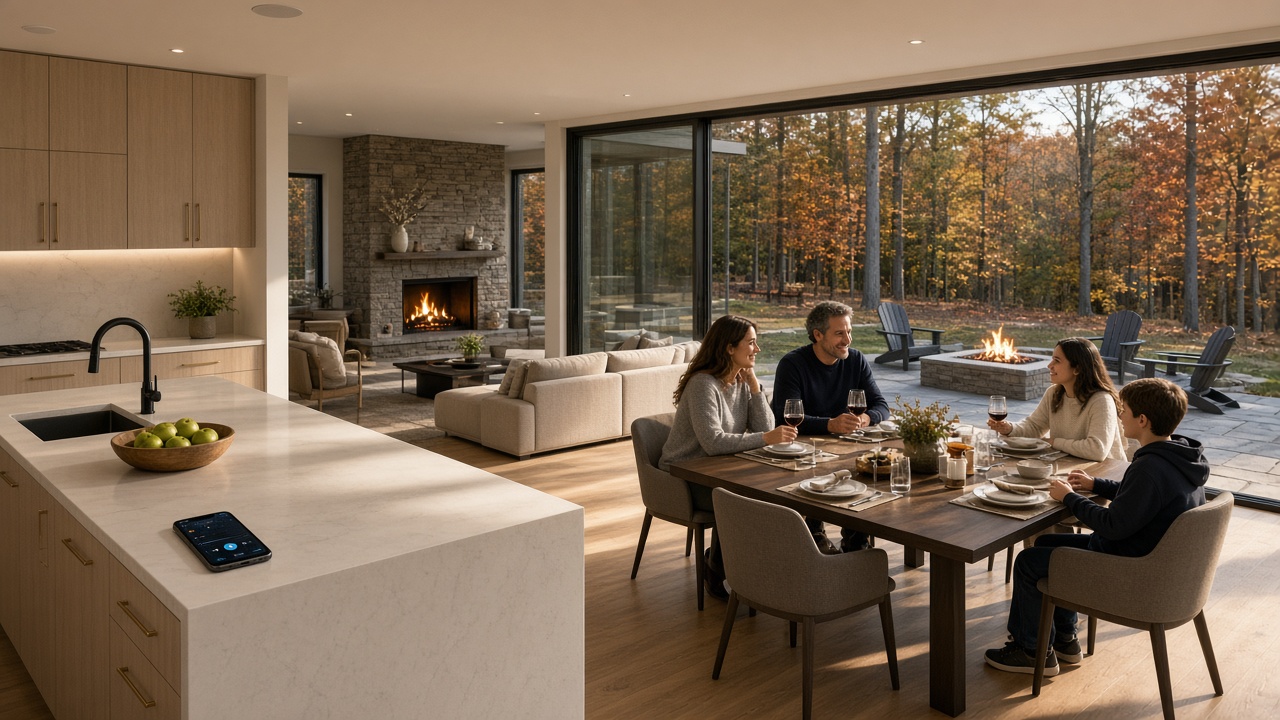
In this guide
- What whole-home music really is
- How to plan rooms and zones
- Choosing the right speakers for each space
- Music outside: patio, pool and yard
- Where the equipment lives
- One app, a wall keypad and your voice
- What makes it sound beautiful
- Why it keeps working year after year
- Getting ready for November 26
- Whole-home music questions
- Meet Ryan
What is whole-home music, and how is it different from a few smart speakers?
Whole-home music is one designed system that plays in every room you choose, from one app, through speakers that are part of the house. A few smart speakers are separate gadgets that each need power, setup and attention.
The difference shows up the first time you host. Smart speakers sit on counters and shelves, each one sized for a small room. They have to be charged or plugged in, they sometimes lose their connection, and they rarely sound the same from one room to the next. Turn one up to fill a big great room and it starts to sound thin and harsh.
A built-in system is planned around the house instead of the gadget. Speakers are placed where the sound should come from, powered by amplifiers that have plenty of headroom, and wired back to one place. Every room is part of the same system, so the music stays in step from the front hall to the back deck, and the volume in each space can be set on its own.
For the people who live there, the result is less to think about. Nothing on the counter, nothing to charge, nothing to pair. You open one app or press one button, and the house plays.
How should you plan rooms and zones for a house full of guests?
Plan zones around how people move through the house on a busy day, not around the floor plan. A zone is any space that plays together at one volume, and the right zones make the system feel effortless.
In most Northern New Jersey homes we work in, the holiday traffic pattern is predictable. Guests come in the front door, gather around the kitchen island, spill into the family room for the game, and drift outside to the patio or fire pit. The quiet rooms, like a study or the primary suite, are where someone goes to take a call or put a baby down.
That pattern tells us how to group the house:
- The kitchen and breakfast area. Usually 1 zone, because people move between them constantly and the music should feel continuous.
- The family room or great room. Its own zone, so the game can play here while the kitchen keeps its playlist.
- The dining room. A separate zone that can drop to a soft background level when everyone sits down to eat.
- The patio, deck and pool. 1 or 2 outdoor zones, depending on how far apart the seating areas are.
- Quiet rooms. Office, bedrooms and guest suites get their own zones that stay off unless someone turns them on.
Open floor plans need extra thought. When the kitchen, dining and family room share 1 big space, 3 separate zones can fight each other. In those homes we often treat the open area as 1 zone with speakers spread evenly through it, so the sound is the same wherever you stand, and save separate zones for rooms with doors.
Which speakers belong in each space?
Ceiling speakers for most rooms, in-wall speakers where the ceiling will not work, and weather-rated speakers outside. The goal is sound that fills the room while the speakers nearly disappear.
In-ceiling speakers
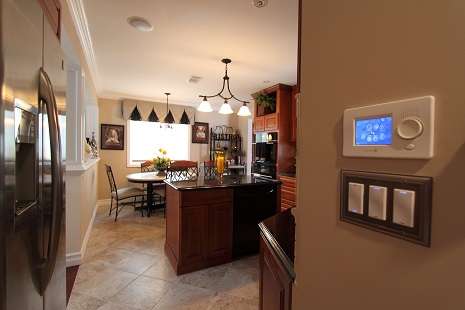
These are the workhorse of whole-home music. A round grille about the size of a recessed light sits flush with the ceiling and can be painted to match. In a kitchen, we place them over the areas where people stand and talk, such as the island and the path to the family room, rather than in the corners. Spacing matters more than size: 2 well-placed speakers will sound better than 1 large one, because the music reaches every seat at a similar level.
Some ceiling speakers have angled drivers that can be aimed toward a seating area, which helps in rooms with high or sloped ceilings. Others put both stereo channels in 1 speaker, which is useful in a hallway, powder room or small bedroom where 2 speakers would be too many.
In-wall speakers
In-wall speakers sit in the wall at ear level, which gives a fuller, more focused sound. They are a good fit for a family room where music and TV share the same space, or for a room with a finished plaster ceiling and no attic access above it.
Bass and fullness
Small speakers can play music beautifully at background levels, but rich bass takes more air. In a great room or entertaining space, we sometimes add a subwoofer that is hidden in a cabinet or set in the wall, so dinner music still has warmth without being turned up.
Speakers you already own
If you have good speakers already in the right spots, they can often join the new system. If they are worn out or placed where the sound is uneven, we will say so and explain why.
Very efficient and professional. Knowledgeable of equipment and products suited for your space/home. Perfectionists at their job and get the task done in promised time.
– dmhajjar (Houzz review)
How do you get beautiful music outside on the patio, by the pool and in the yard?
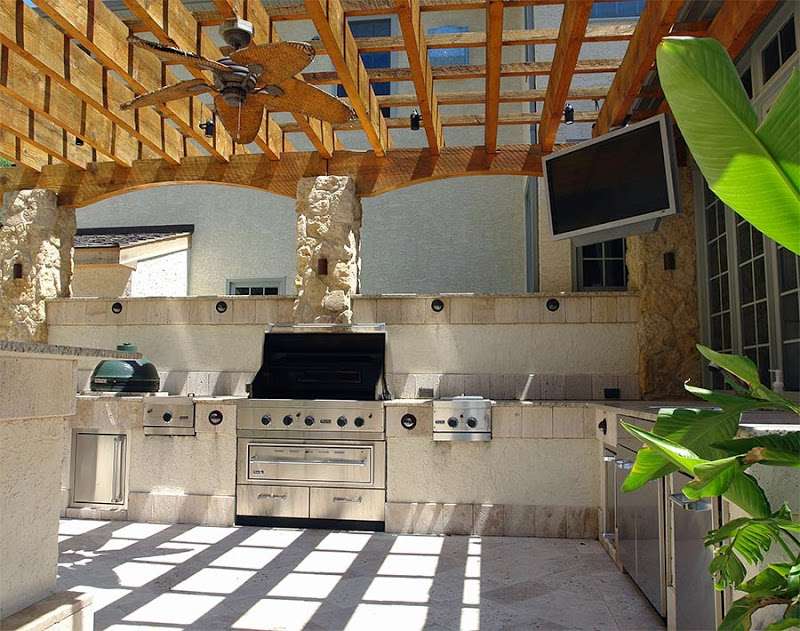
Use weather-rated speakers placed around the seating areas, play them at a moderate volume, and aim them toward the house. Outdoors there are no walls to hold the sound, so placement does most of the work.
Indoors, walls and ceilings reflect sound back toward you. Outside, sound spreads out and fades quickly, which is why 1 pair of speakers on the back of the house often ends up too loud on the deck and too quiet at the far end of the patio. The fix is more speakers, each playing softer, spread around where people actually sit.
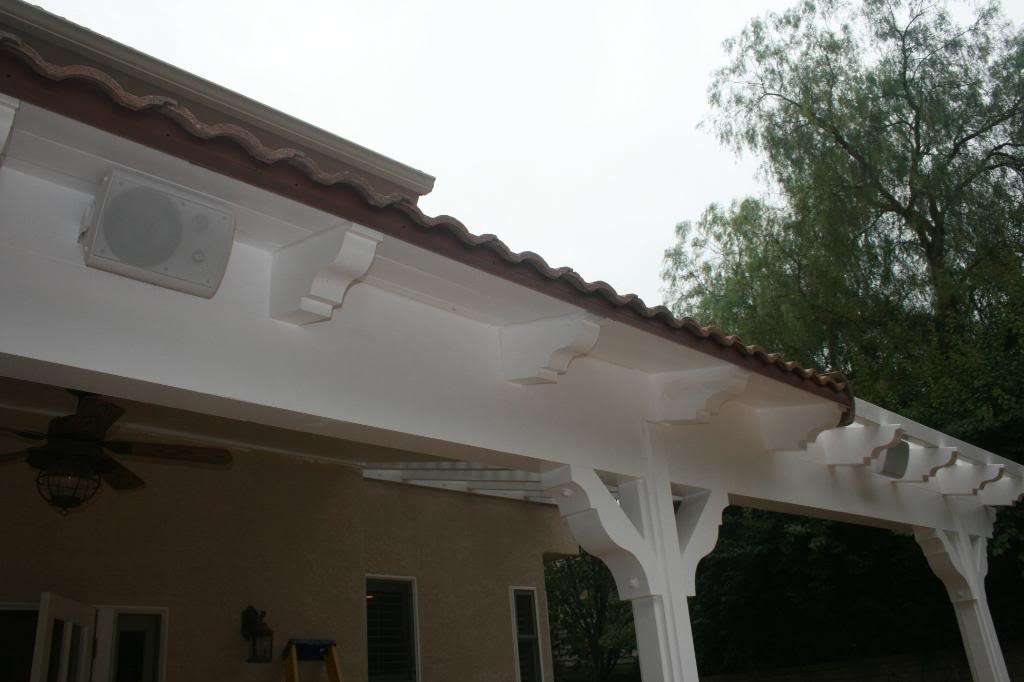
There are 3 main options outside, and many yards use more than 1:
- Under-eave and wall-mounted speakers. Mounted under a porch roof or soffit, they cover a deck or covered patio and stay protected from most weather.
- Landscape speakers. Small satellite speakers on stakes, set in planting beds around a patio or pool. They blend into the garden, and a buried subwoofer can add fullness without anything visible.
- Rock-style and planter speakers. Useful where a stake speaker would look out of place, such as near a stone wall or fire pit.
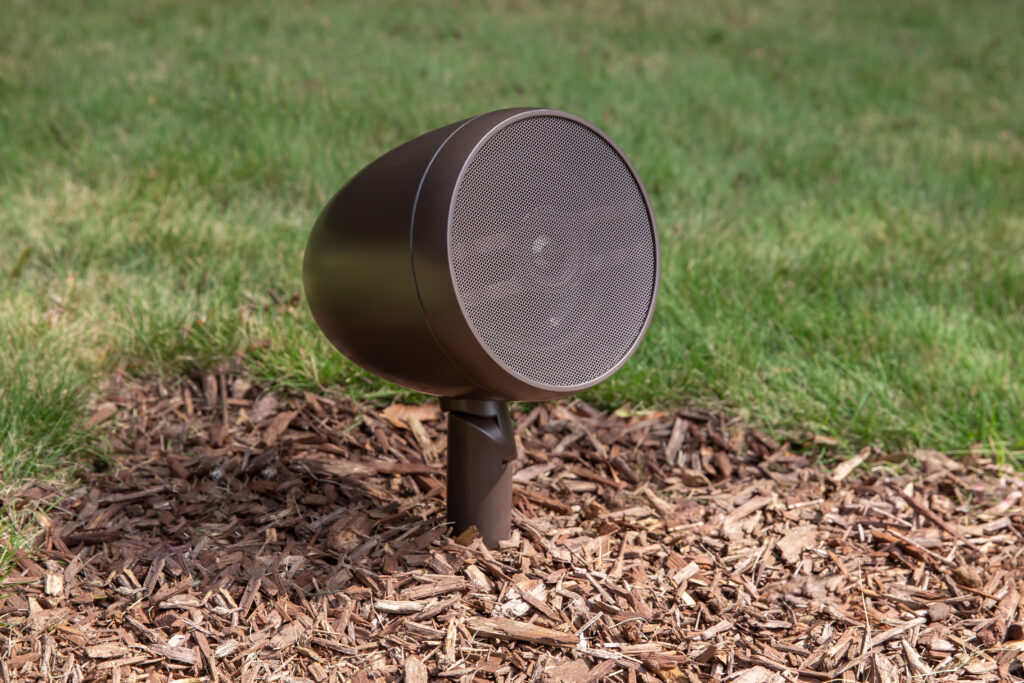
Speakers designed for outdoor use are built to handle New Jersey rain, snow, heat and humidity. The wiring between them runs underground, in direct-burial cable, so nothing crosses the lawn.
Neighbors are part of the plan, too. Pointing speakers toward the house and away from the property line keeps the music where your guests are. We can also set a maximum volume for the outdoor zone, so a teenager with the app cannot turn the backyard into a concert at 10 p.m.
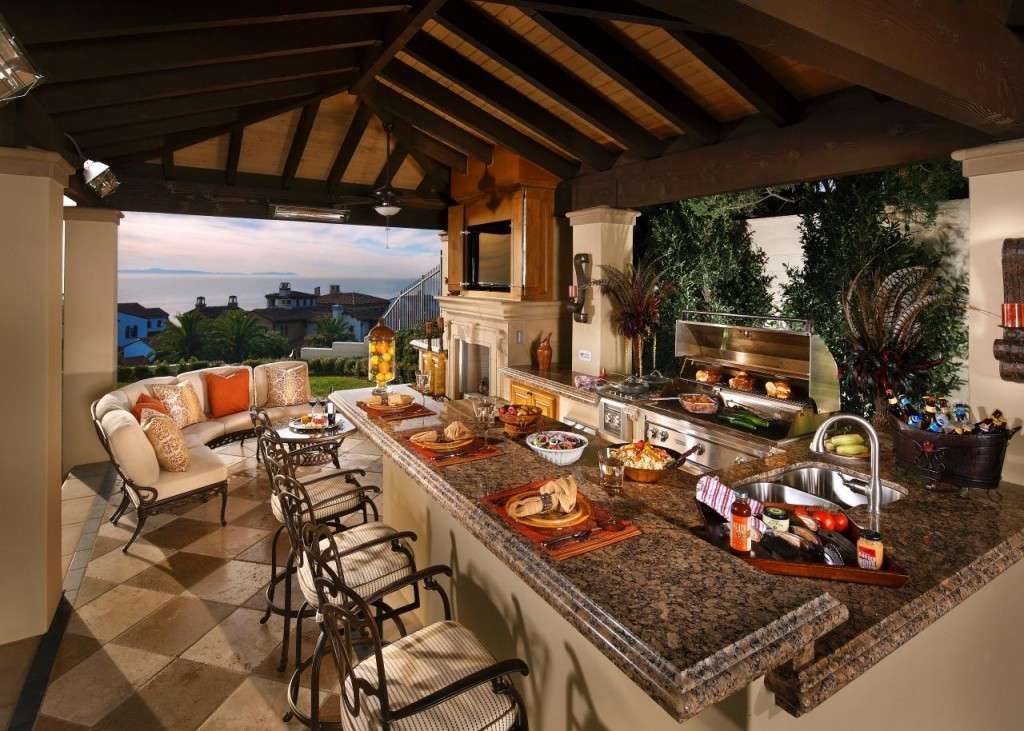
Thinking about the patio and the pool as well as the kitchen? call (973) 945-5275 or text (973) 945-5275, and Ryan will walk the yard with you. Our whole-home music page shows the rooms most families start with.
Where does the equipment go so nothing clutters the house?
The amplifiers and streaming equipment live in 1 place, usually a closet, basement utility area or cabinet, and the speakers are wired back to it. Nothing sits in the rooms where you live.
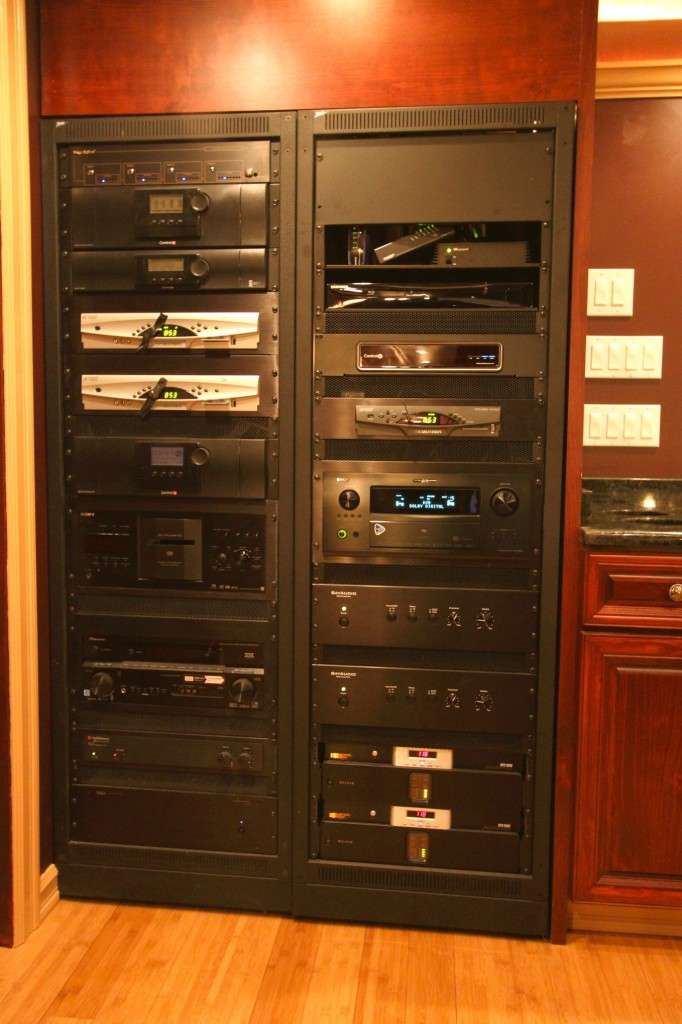
This central approach has real benefits beyond looks. Amplifiers need ventilation, and a rack with proper airflow keeps them cool and lasting longer. Every speaker wire is labeled, so a change years from now is simple. Power protection guards the equipment against surges, which matter in a region where summer storms and winter outages are part of life.
The amplifier is where sound quality starts. Each zone gets enough clean power to play at a party volume without straining. That headroom is why a well-built system still sounds relaxed and clear when the house is full, instead of harsh when you turn it up. For clients who want the richest possible sound in a main listening room, we design with McIntosh amplifiers. For many rooms, a quality multi-zone amplifier does the job beautifully.
In a finished home, getting wire from the rack to each speaker is the part people worry about most. Most of the time we can route it through attics, basements and existing chases with small, clean openings that are patched before we leave. Some rooms are harder, and we will point those out during the first visit instead of surprising you later.
How do you control music in every room from one app?
One app on your phone shows every zone, inside and out, with the music you are playing and the volume in each. A wall keypad handles the basics for anyone who does not want to reach for a phone.
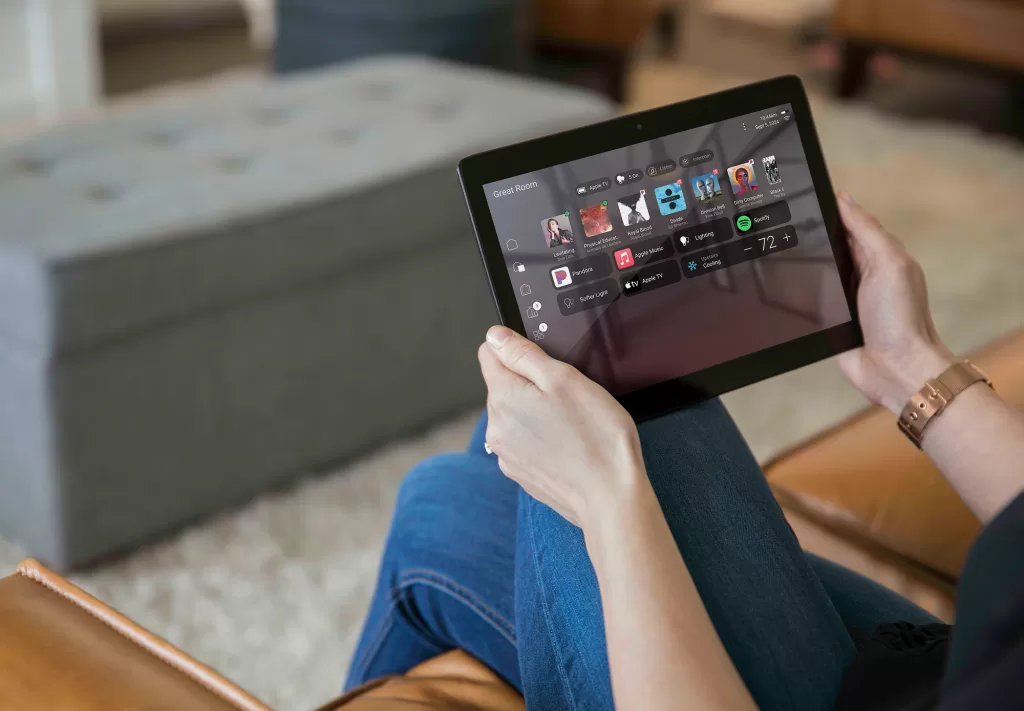
A typical holiday sounds like this in practice. In the morning, you start a quiet playlist in the kitchen only. As guests arrive, you group the kitchen, family room and patio so they play the same music together. When dinner starts, you lower the dining room and leave the patio up for the people by the fire. Late in the evening, everything turns off with 1 tap, except the room where someone is still telling stories.
Families who start with Sonos like how easy it is for everyone, including guests and grandparents. For homes that also want lighting, shades and climate on the same system, we can tie music into a home control platform such as Control4, so 1 button by the back door can turn on the patio lights and the patio music together. Either way, the app works with the streaming services you already pay for.
Wall keypads are underrated. A small keypad by the kitchen doorway with buttons for on, off, volume and a favorite station means anyone can use the system without knowing how. For many families, that keypad gets used more than the app.
Voice control is an option too. If your family already speaks to an assistant for the weather or timers, it can start music in a room or turn it down. It is a convenience, not a requirement.
We were surprised with what (Ryan) took away from the conversation – even reading between the lines to put everything we wanted and needed right into his designs for us. At first, we really didn’t know who to go with; we hadn’t had any renovations to our home before. We set up a consultation and liked (Ryan) because he was personable, a good listener and knowledgeable. He asked about our wish list and gave us some ideas…which were great.
– Mr. & Mrs. Caywood (1 Sound Choice client testimonials)
What makes a whole-home system sound beautiful instead of just loud?
Even coverage, clean power and tuning to each room. Beautiful sound means you can hear every word of a song at a level where people can still talk.
Most of what makes music sound good at home has little to do with the brand on the speaker. It comes from 4 things:
- Placement. Speakers spaced so no seat is right under one and far from the next. This is why a planned layout beats adding a bigger speaker.
- Power. Amplifiers with enough headroom that peaks in the music never clip. Clipping is the harsh, tiring sound you hear from small speakers pushed too hard.
- Tuning. Every room shapes sound differently. A tile kitchen with stone counters sounds bright; a carpeted family room with drapes sounds soft. We adjust each zone so the same song sounds natural in both.
- Source quality. Most streaming services now offer high-quality or lossless options. A good system lets you hear the difference, especially in your main rooms.
Volume balance between rooms also matters on a holiday. If the kitchen is set louder than the family room, guests walking between them feel a jolt. We set each zone so a single group volume feels the same everywhere.
Why does a professionally built system keep working year after year?
Because it is designed, documented and supported by the same team that installed it. The point is that it just works, on Thanksgiving and on an ordinary Tuesday.
The owners and executives we work with make high-stakes decisions all day. The last thing they want at home is a system that needs troubleshooting. Peace of mind comes from a few habits that are easy to overlook:
- Commercial-grade wiring and labeling. Every run goes back to the rack and is marked, so a fix takes minutes instead of hours.
- Power protection. Surge and battery backup keep a storm from taking out the system or scrambling settings.
- Remote checks. With your permission, many issues can be looked at from our office, often before you notice them.
- A real phone number. You call or text the people who built it, not a help line in another time zone.
There is a minor point worth checking during the same visit: is your Wi-Fi up to it? Streaming music and the app both rely on the home network, and 20 guests with phones add load. We test signal strength in the kitchen, living areas and outside, and tell you if anything needs attention.
I have hired 1 Sound Choice on several occasions over the past 10 years for several projects (from minor implementations to a whole house system). Ryan and the team at 1 Sound Choice are consummate professionals – extremely knowledgeable and up to date with technology, focused on delivering the best solution to fit your need, and highly customer service oriented. This combination plus the quality of finished product (every time) have made me a loyal customer… I highly recommend 1 Sound Choice.
– Terry Maytin (Houzz review)
How do you get whole-home music ready before family arrives on November 26?
Start the conversation now, focus on the rooms that matter most on the holiday, and let the rest follow. Thanksgiving is Thursday, November 26, 2026.
We do not guess at schedules on a web page, because every house is different. What we can explain is what goes into the work, so you know why an early decision helps:
- A walk-through with Ryan. He sees how your family uses the house, where people gather, and what is above the ceilings and behind the walls.
- A clear plan. Zones, speaker locations, where the equipment will live and how you will control it.
- Equipment and installation. Wire is run, speakers are set, and the rack is built and ventilated.
- Tuning and setup. Each zone is balanced, your streaming services are connected, and the app and keypads are programmed.
- A short walk-through for the family. Everyone who will use it learns it in a few minutes.
If a room needs more work than the calendar allows, we will tell you during the first visit and recommend doing the main gathering spaces first. The kitchen, family room and patio cover most of a holiday, and the dining room, primary suite or basement bar can join the same system later.
Want music playing when the family walks in? call (973) 945-5275 or text (973) 945-5275. Or read the whole-home music before Thanksgiving page and tell us which rooms matter most.
What One Sound Choice clients say
The quotes in this guide are copied word for word from families who invited One Sound Choice into their homes.
Whole-home music questions
How many speakers does a whole-home music system need?
It depends on the size and shape of each space, not on a fixed number. A kitchen with an island often needs 2 to 4 ceiling speakers for even sound, a large great room may need 4 to 6, and a patio or yard usually sounds best with several small speakers at a modest volume instead of 2 loud ones.
Can different rooms play different music at the same time?
Yes. Each room or group of rooms is its own zone, so the kitchen can play one playlist while the patio plays another and the office stays quiet. You can also group every zone together so the whole house plays the same song in sync.
Will outdoor music bother the neighbors?
It should not when the speakers are planned well. Spreading several smaller speakers around the seating area and aiming them toward the house lets everyone hear clearly at a lower volume, and we can set a top volume limit for the outdoor zone.
Can guests play their own music without joining our network?
Yes, with the right setup. Many systems can give a guest a simple way to add a song to the queue without handing out your main Wi-Fi password, and you stay in control of the volume and which rooms play.
What happens if something stops working?
You call or text the same team that designed and installed it. Because we built the system and documented it, we know where every speaker and wire runs, and many issues can be checked remotely before anyone needs to visit.
How do we get started before Thanksgiving?
Call or text Ryan at (973) 945-5275. He will walk the house with you, ask how your family spends a holiday, and tell you plainly which rooms can be ready by November 26 and which should wait.
Meet Ryan
Ryan Herd is the founder of One Sound Choice. He is a former Mayor of Pequannock Township, a TEDx speaker, a patent holder and the author of Join the Smart Home Revolution, with more than 30 years in home technology. When Ryan plans whole-home music, he starts with how your family spends a holiday and designs from there.
Where we install whole-home music
One Sound Choice designs and installs whole-home music in kitchens, great rooms, patios and pool areas across Morris, Bergen, Essex, Passaic, Somerset and Hunterdon counties in Northern New Jersey, and for clients in Manhattan.
One Sound Choice, 8 Tilley Ave, Pompton Plains, NJ 07444. Phone: (973) 945-5275. You can also text Ryan. Written by Ryan Herd, founder of One Sound Choice.