
Remote climate control systems are changing how we manage home temperatures. They offer cost savings, customized comfort, and convenience by allowing you to adjust heating, cooling, and air quality from anywhere via your smartphone or computer. These systems use smart technology, like occupancy sensors and geofencing, to reduce energy waste, improve efficiency, and provide detailed energy insights. Here’s what you can expect:
- Lower Energy Bills: Save up to 23% on heating and cooling costs annually by minimizing energy waste.
- Improved Comfort: Automated scheduling and zoned control ensure every room is set to your preferred temperature.
- Remote Access: Control your home’s climate from anywhere, even on the go.
- Smart Home Integration: Sync with lighting, shades, and security for a unified system.
- Smaller Carbon Footprint: Reduce energy use, emissions, and waste for a greener home.
With features like voice control, weather-based adjustments, and compatibility with utility rebates, these systems make managing your home’s climate easier and more efficient. Professional installation ensures optimal performance and seamless integration with other smart home devices.
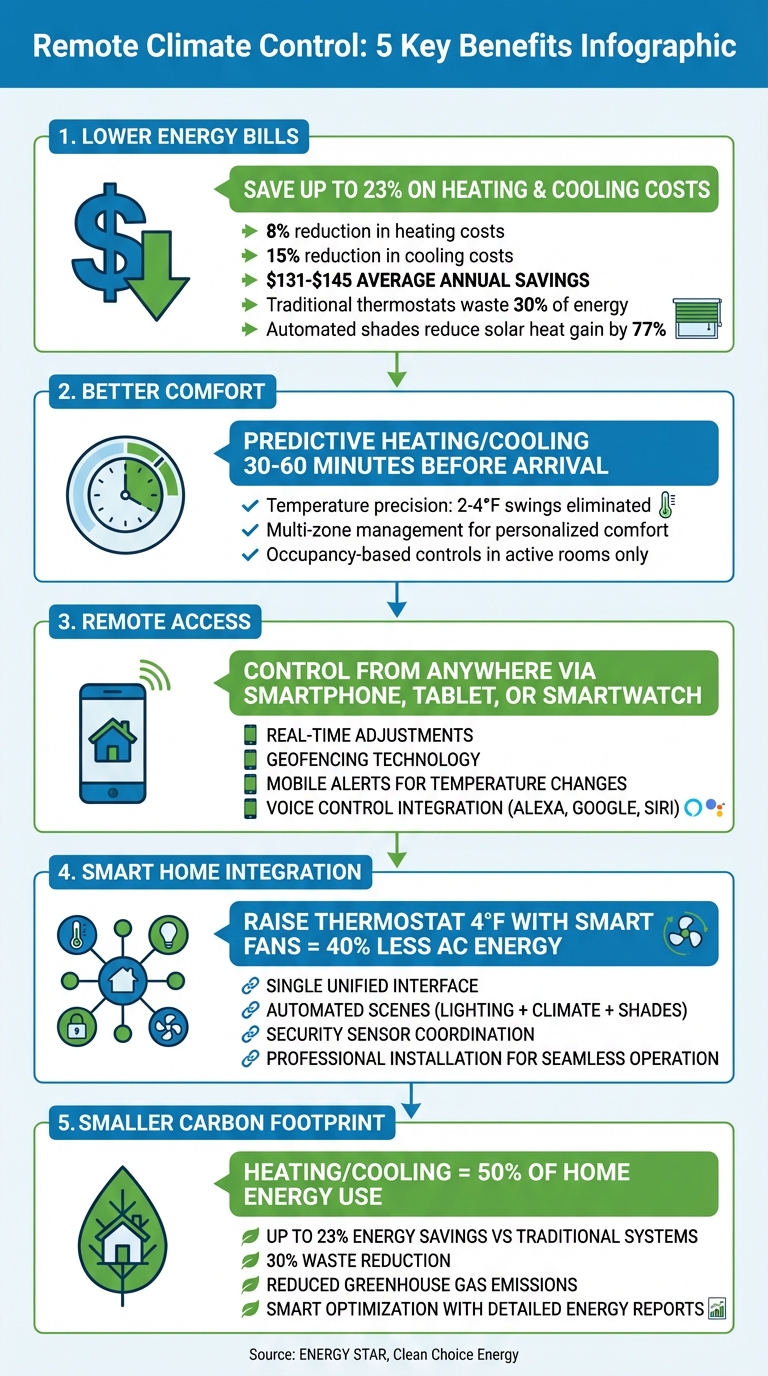
Remote Climate Control Benefits: Energy Savings and Cost Reduction Statistics
1. Lower Energy Bills and Reduced Costs
Remote climate control can significantly cut down on energy waste by adjusting HVAC settings based on whether anyone is home. Traditional thermostats often keep running at full capacity even when the house is empty, leading to as much as 30% of energy being wasted on climate control [9]. Smart systems, on the other hand, use features like occupancy sensors and geofencing to detect when everyone has left. They then automatically switch to energy-saving mode, resuming normal settings only when someone returns. These automatic adjustments can lead to noticeable savings on energy bills.
For example, a smart thermostat can lower heating costs by around 8% and cooling costs by about 15%, saving a typical household between $131 and $145 annually. If you take it a step further with advanced systems that include zoned control and smart vents, you could see savings of up to 23% compared to traditional setups [2][9][10].
"By heating and cooling your home more efficiently with a smart thermostat, you can save significant amounts of energy – which can mean savings as high as $145 a year."
These systems go beyond simple schedules. Many use learning algorithms to adapt to your daily routine, tracking when you wake up, leave for work, and return home. If your schedule changes unexpectedly, you can tweak the settings remotely using your smartphone, ensuring no energy goes to waste. Plus, monthly energy reports offer detailed insights, helping you optimize usage during expensive peak-rate hours.
To make things even better, many utility companies and ENERGY STAR programs provide rebates for installing smart climate control systems, which can help offset the upfront costs [7]. Pairing these systems with automated shades that close during the hottest parts of the day can reduce solar heat gain by as much as 77%, further easing the demand on your air conditioning [9].
sbb-itb-c5b321b
2. Better Comfort with Automated Scheduling
Automated scheduling doesn’t just save money – it makes life at home more comfortable by adapting to your routine. While efficient energy use is a big part of remote climate control, the real win is the consistent comfort it offers, perfectly aligned to your lifestyle. Gone are the days of fiddling with the thermostat. Instead of walking into a home that’s too hot or cold, smart systems use predictive heating and cooling to ensure your space is at the ideal temperature 30–60 minutes before you need it [2][5]. These systems learn your daily habits – when you wake up, leave for work, and return home – and adjust automatically to fit your schedule. This proactive approach creates a seamless and personalized comfort experience.
With occupancy-based controls, built-in sensors detect which rooms are in use and direct airflow accordingly, cutting back on energy waste in empty spaces [9][6]. For families with varying preferences, multi-zone management allows you to set different temperatures in specific areas, like bedrooms or living rooms, ensuring everyone’s comfort [11].
Smart systems also use adaptive learning algorithms and geofencing to refine your schedule. They make automatic adjustments based on your manual inputs and real-time location changes, offering flexibility and convenience [9][5][11].
"The ability to remotely control and program the thermostat from anywhere gives you the convenience of adjusting the temperature to your liking, creating a comfortable home environment."
These systems even respond to external weather, seamlessly switching between heating and cooling during tricky seasons like spring or fall to maintain a steady indoor climate [3][1]. Traditional thermostats often allow temperature swings of 2°F to 4°F throughout the day. In contrast, automated systems offer precise, steady regulation [9]. To get the most out of these features, consider placing remote sensors in the rooms your family uses most, rather than relying solely on the main thermostat. This ensures the system prioritizes comfort where it matters most [9][11].
3. Control Your Climate from Anywhere
With remote access, managing your home’s climate becomes effortless, no matter where you are. Whether you’re at work, on vacation, or traveling, you can adjust the temperature using your smartphone, tablet, laptop, or smartwatch – as long as you have an internet connection. This feature works seamlessly with automated scheduling, giving you the flexibility to respond to unexpected changes.
Imagine this: you leave work early, an event gets canceled, or the weather takes a sudden turn. Instead of coming home to an uncomfortable environment, you can tweak your home’s temperature in real-time, ensuring it’s just right when you walk through the door. Forgot to set vacation mode before heading out? No problem – fix it remotely. And during unexpected cold spells, you can increase the heat to prevent frozen pipes, even if you’re miles away.
Some systems take convenience up a notch with geofencing technology. By using your phone’s GPS, they can detect when you’re leaving home or on your way back. The system can then automatically switch to an energy-saving mode or start pre-heating or cooling your home before you arrive. Many setups also offer zoned control, meaning you can adjust the temperature in specific areas, like the bedroom, without affecting the rest of the house.
Remote climate control isn’t just about comfort; it’s also about peace of mind. Mobile alerts can notify you of unusual temperature changes, which might signal an HVAC issue, an open window, or even a power outage while you’re away. For families caring for elderly relatives who live separately, this monitoring feature ensures their home stays safe and comfortable.
Voice integration adds another layer of convenience. With platforms like Amazon Alexa, Google Assistant, or Siri, you can make hands-free adjustments from anywhere. Whether you’re rushing through a busy morning or winding down for the night, voice commands make it easy to manage your home’s climate without lifting a finger. It’s a simple way to keep your home efficient and cozy.
4. Works with Your Whole Smart Home System
Remote climate control becomes even more effective when it’s part of a fully integrated smart home system. Rather than juggling separate apps for temperature, lighting, shades, and security, platforms like Control4 bring everything together in one streamlined interface. This allows you to create "scenes" where multiple devices respond to a single command. For instance, a "Good Morning" scene could adjust the thermostat, open the blinds, and turn on the kitchen lights – all at the same time [8]. This level of integration takes remote control to the next level by unifying climate, lighting, and security functions seamlessly.
When your devices work together, efficiency gets a serious boost. Take automated shades, for example. They can team up with climate sensors to block the afternoon sun during summer or capture extra warmth in winter, reducing the strain on your HVAC system. Similarly, smart ceiling fans can create a wind-chill effect, enabling you to raise your thermostat setting by about 4°F without sacrificing comfort. This simple adjustment can cut air conditioning energy use by up to 40% [9].
Security integration adds another layer of convenience and savings. For example, when your climate system is connected to door and window sensors, it can automatically pause heating or cooling if a window is left open, avoiding unnecessary energy waste. In emergencies like a fire, integrated systems can shut down HVAC units to prevent smoke from spreading throughout the house [3]. Even motion sensors from your security or lighting setup can signal the thermostat to reduce energy use in unoccupied rooms, focusing resources where they’re actually needed [5][7].
Professional integration takes all these benefits a step further by ensuring your systems work together flawlessly. For families in Northern New Jersey, professional installation services can help create a truly unified smart home experience. One Sound Choice specializes in designing and installing smart home ecosystems that connect climate control with lighting, shades, security, and even entertainment systems. With over 30 years of expertise and more than 2,500 successful installations, they deliver systems where everything operates through a single, easy-to-use interface – eliminating the hassle of managing multiple apps or dealing with compatibility issues.
"Control4 is one of those things you don’t know that you need until you have it. I love the utility of it, having ‘settings’ in certain rooms & from a security standpoint it’s an integral part of our house." – Joe P, Control4 Homeowner [8]
5. Smaller Carbon Footprint and Less Waste
Did you know that heating and cooling make up nearly 50% of the energy used in an average American home? [6] That’s a massive slice of energy consumption – and a huge opportunity to make a difference. Remote climate control systems tackle this by ensuring energy is used more efficiently, focusing on actual occupancy instead of wasting power on empty rooms or running systems when no one’s home.
Traditional climate control systems can waste as much as 30% of the energy used for heating and cooling [9]. Smart thermostats, however, use tools like occupancy sensors, geofencing, and learning algorithms to focus energy use where it’s needed. This smarter approach can result in energy savings of up to 23% compared to conventional systems [2]. And because reduced energy use means less power generation, this directly cuts greenhouse gas emissions.
"By optimizing energy usage, these systems help reduce greenhouse gas emissions and promote more sustainable living." – Digital Installers [3]
Smart thermostats also provide detailed energy reports, helping you spot patterns and fine-tune your habits for even more efficiency. These tools work hand-in-hand with other smart home features to amplify their impact on sustainability.
For instance, pairing remote climate control with smart blinds can significantly cut down on solar heat gain – up to 77% during peak sun hours [9]. This keeps your home cooler and reduces the load on your AC. Occupancy sensors ensure that heating and cooling are focused only on spaces where people are present, while automated maintenance alerts keep your HVAC system running smoothly and efficiently. Together, these features make a meaningful dent in energy waste and environmental impact.
Conclusion
Remote climate control is transforming how we manage home comfort, offering five standout benefits: lower energy costs through smart automation, customized comfort with multi-zone control, remote accessibility, integration with other smart home systems, and a reduced environmental impact. Together, these features simplify daily life, improve comfort, and help homeowners save money year after year.
When integrated seamlessly, these systems perform at their best. Professional installation ensures all components work together smoothly, enabling advanced features like automatically closing shades during peak sunlight to ease the strain on your HVAC system. This level of integration is essential for balancing comfort and efficiency.
"By installing climate control solutions… we can ensure that you are able to control your home’s temperature with the same system you control your lighting, shades, or any other smart home technology." – TSP Smart Spaces [6]
In Northern New Jersey, One Sound Choice brings over 30 years of experience to families looking for professional-grade smart home solutions. Led by Ryan "The Smart Guy" Herd, their team specializes in creating systems that are easy to use, durable, and designed with real family needs in mind. They handle everything from verifying compatibility and integrating systems to offering ongoing support and proactive monitoring, ensuring your climate control system remains reliable for years.
For families ready to invest in professional climate control, expert installation and support make all the difference. A properly designed system not only enhances comfort but can also pay for itself in under two years while delivering long-term savings and convenience [4].
What One Sound Choice clients say
Ryan listened to us – he understood what we wanted to accomplish. (The 1 Sound Choice team’s) commitment to post-installation support and service has been unbelievable. They are professionals in every aspect and have gained our trust throughout the completion of our project.
– Mr. & Mrs. Maytin (1 Sound Choice client testimonials)
I’d (tell others) that Ryan’s very professional and very easy to work with, in terms of budgeting and listening to what you want to have done. He never pushed us toward anything we couldn’t afford or didn’t want and he got the job done on time.
– Mr. & Mrs. DeSantis (1 Sound Choice client testimonials)
Truly One Sound Choice, you won’t find better. I called a couple of AV companies for quotes but on speaking with Ryan I had confidence that One Sound Choice would do the job right. Most companises had assured me that they would not have to cut holes in my walls to achieve my project goals. Ryan was up front, honest and realistic outlining all the possible challenges my install might face whilst reassuring me that One Sound Choice had the capabilitiy and expertise to meet my goals. Consulation was painless and Ryan and Kenny captured my requirements perfectly and offered advice based on their experience regarding optional additons to the project, which were practical and delivered exceptional enhancements. Ryan provided me with a view of what could be achieved given my requirements and then worked with me complete the project with consideration to my budget, but without compromising the final solution. Even completed the project without requiring any patch work which was a bonus. Ryan and Kenny were a pleasure to work with, respectful and courteous and I had confidence having them in our home. Highly recommend for any AV work you are considering. You will not be disappointed with the results.
– Leighton (Houzz review)
FAQs
How does geofencing help save energy with remote climate control systems?
Geofencing uses your smartphone’s location to automatically adjust your home’s thermostat settings. Here’s how it works: when you leave home, the system lowers or raises the temperature to save energy. Then, as you head back, it restores your preferred settings so your home is comfortable when you arrive.
This feature not only cuts down on wasted energy but also adds a layer of convenience, making it a great option for families with packed schedules.
What are the advantages of combining remote climate control with other smart home devices?
Integrating remote climate control with other smart home devices brings a new level of comfort, convenience, and energy savings to your home. Imagine being able to tweak your home’s temperature from anywhere – at the office, on a getaway, or even from the couch – so it’s always just right when you walk through the door.
Pairing this technology with tools like air quality sensors, humidity monitors, or occupancy detectors can take things even further. For instance, the system could automatically adjust heating or cooling in rooms that aren’t being used, cutting down on energy waste. This not only trims your utility bills but also helps your HVAC system last longer by reducing unnecessary strain.
By combining these devices, you get a streamlined, centralized setup that lets you fine-tune temperature settings for different areas of your home. The payoff? A consistently cozy environment, lower energy expenses, and a smarter, more efficient way to live.
Can a remote climate control system help reduce energy use and lower a home’s environmental impact?
Remote climate control systems are a game-changer when it comes to managing energy use. These systems fine-tune heating and cooling based on your daily routine and preferences, cutting back on wasted energy. The result? Lower utility bills and reduced greenhouse gas emissions.
By keeping your home at steady, efficient temperatures, they not only make your living space more comfortable but also promote a more eco-friendly lifestyle. It’s a practical option for households aiming to save money and reduce their environmental impact.
Related Blog Posts
- How to Choose Smart Lighting for Every Room in Your Home
- Smart Home Questions Answered: 15 Common Concerns for Families
- Best Smart Home Upgrades for Families: Top 10 Systems in 2025
- Smart Lighting with Control4 Systems
More questions
Can I change the heat when I am away?
Yes. You can turn the heat or AC up or down from your phone, so the house is comfortable when you get home.
One Sound Choice, 8 Tilley Ave, Pompton Plains, NJ 07444. Call or text (973) 945-5275. We work in homes across Morris, Passaic, Bergen, Essex, Somerset, and Hunterdon counties. Written by Ryan Herd, founder of One Sound Choice.