
When deciding on smart home technology, the choice often comes down to balancing quality and cost. While DIY systems are cheaper upfront, professional-grade systems offer long-term reliability, security, and value. Here’s a quick rundown:
- DIY Systems: Cost $100–$3,000, rely on wireless protocols, and require self-installation. They often face issues like interference, compatibility problems, and shorter lifespans (3–7 years). Hidden costs include repairs, subscriptions, and security risks.
- Professional Systems: Cost $10,000–$150,000, use hardwired or hybrid setups, and include expert installation. They last decades, provide integrated control, and offer ongoing support, making them a long-term investment in convenience, security, and property value.
Choosing professional systems ensures better performance and fewer headaches, while DIY solutions are suited for smaller budgets but come with trade-offs in reliability and security.
Home Automation: DIY vs Pro, What’s the Difference?
Problems with Low-Cost Smart Home Systems
At first glance, low-cost smart home systems might seem like a great deal, but their technical limitations and security gaps often reveal hidden downsides. While they allow for quick and inexpensive setups, these budget devices can lead to significant challenges, especially as you expand your system or depend on it for critical tasks like security or network reliability.
Common Problems with Consumer-Grade Devices
One major drawback of budget smart home devices is their vulnerability to wireless interference. These systems typically rely on Wi-Fi, Zigbee, or Z-Wave signals, all of which can suffer from bandwidth congestion or environmental disruptions. This means your smart lock or camera could fail at the moment you need it most.
Another frequent issue is the lack of interoperability. Devices from different brands often struggle to work together, forcing users to juggle multiple apps just to manage basic functions. Studies show this lack of compatibility creates significant inconvenience for consumers, leaving them to deal with technical headaches on their own. Unlike professional-grade systems that come with ongoing support, these DIY setups place the entire burden of maintenance on you. For families without a tech-savvy member, this can create constant stress – sometimes referred to as "technological anxiety" – over the fear that something might break without an easy fix.
These technical and compatibility problems don’t just affect performance; they can also lead to unexpected costs, making DIY solutions less economical in the long run.
Hidden Costs of DIY Installations
The advertised price of DIY smart home kits, ranging from $70 to $450, often doesn’t reflect the true cost of a fully functional system. Adding essential components like sensors, detectors, and a hub can push the total expense to anywhere from $300 to $1,540 [3][5].
On top of that, consumer-grade devices typically have a lifespan of just 3 to 7 years [5], far shorter than the decades-long durability of professional systems. Ongoing costs also add up: annual battery replacements can cost $20 to $50 [5], while cloud storage fees for cameras may run between $60 and $300 per year [5]. If something goes wrong, a professional service call to fix connectivity issues can cost $75 to $200 [5] – sometimes more than the device itself. And with self-monitoring, you’re on your own to respond to every alert, with no professional backup.
Beyond these financial concerns, DIY systems also come with serious risks to your privacy and security.
Privacy and Security Risks
Low-cost smart home devices often lack robust security measures, making them vulnerable to breaches. In fact, 50% of consumers cite privacy and security concerns as a barrier to adopting smart home technology [8]. Additionally, 90% of people worry about identity theft and fraud linked to connected devices, while 89% fear their personal data could be accessed by third parties without their consent [7].
The architecture of these systems often exacerbates these risks. As HomeAdvisor explains:
"Wireless systems are prone to interference and hacking. Hardwired systems are less prone to interference and are exceedingly difficult to hack, as there’s no wireless signal to intercept" [2].
Budget devices frequently rely on cloud-based storage, meaning sensitive data like video feeds and access logs are stored on servers outside your control. In just one year, 2.8 billion consumer data records were exposed to cybercriminals [7].
The lack of professional guidance makes these risks even worse. Without expert support, homeowners may misconfigure security settings, use weak passwords, or fail to update firmware. As Professor Moutaz Haddara points out:
"Deficiency in user technical knowledge also may make smart homes an appealing target for cybercriminals" [8].
Ultimately, while low-cost systems might save you money upfront, they often come with a steep price in terms of compromised privacy and security.
Benefits of Professional-Grade Smart Home Systems
Professional-grade smart home systems offer a level of performance and reliability that consumer devices simply can’t match. These systems rely on enterprise-grade hardware, which ensures faster speeds, stronger security, and greater dependability. Unlike budget-friendly devices that often depend on wireless signals prone to interference, professional setups frequently use hardwired protocols or hybrid systems with Cat-5 cabling. These features directly address the shortcomings of DIY solutions discussed earlier.
Reliability and Longevity
One of the standout features of professional systems is their durability. While consumer devices typically last between 3 to 7 years, professional-grade systems are built to remain functional for decades. Certified installation ensures that all components are compatible, reducing the risk of costly errors that can arise from DIY attempts [1].
Another key advantage is the inclusion of ongoing support and maintenance. Many professional systems come with aftercare services that handle firmware updates, system troubleshooting, and adjustments as your needs evolve. This level of support is particularly appealing to homebuyers; nearly half (49%) say they are more inclined to choose a home with industry accreditation, such as CEDIA certification, which guarantees access to technical support [1].
Integrated Systems for Simple Control
Professional systems shine when it comes to integration. Brands like Savant, Elan, and Crestron allow you to manage various aspects of your home – lighting, security, HVAC, and entertainment – all through a single interface. With features like "macros", you can streamline control even further. For instance, a single "Goodnight" button can lock doors, dim lights, and adjust the thermostat all at once [2].
This level of integration requires meticulous planning to ensure compatibility across devices. Professionals ensure that every component works together seamlessly, avoiding the fragmented experience common with DIY installations. The Home Technology Association underscores the importance of a strong foundation:
"Your home’s network is the foundation of much of your activity… We recommend strongly that you invest in an enterprise-grade network for your home" [6].
By unifying control and enhancing connectivity, professional systems also elevate home security measures, making them more robust and reliable.
Better Security and Ongoing Support
Security is another area where professional systems excel. Hardwired or air-gapped connections significantly reduce the risk of hacking [2]. Certified installers provide 24/7 monitoring and ensure that your system stays secure through regular updates and maintenance checks [5].
The long-term value of professional support becomes evident over time. As CEDIA highlights:
"Paying a professional installer means everything will work as intended and reduces the risk of expensive mistakes (such as buying incompatible products)" [1].
Once introduced to industry standards, a majority of consumers – 63% – prefer having a certified professional handle their smart home installation [1]. This preference reflects the trust and peace of mind that come with expert guidance and support.
sbb-itb-c5b321b
Cost Comparison: Low-Cost vs. Professional Smart Home Systems
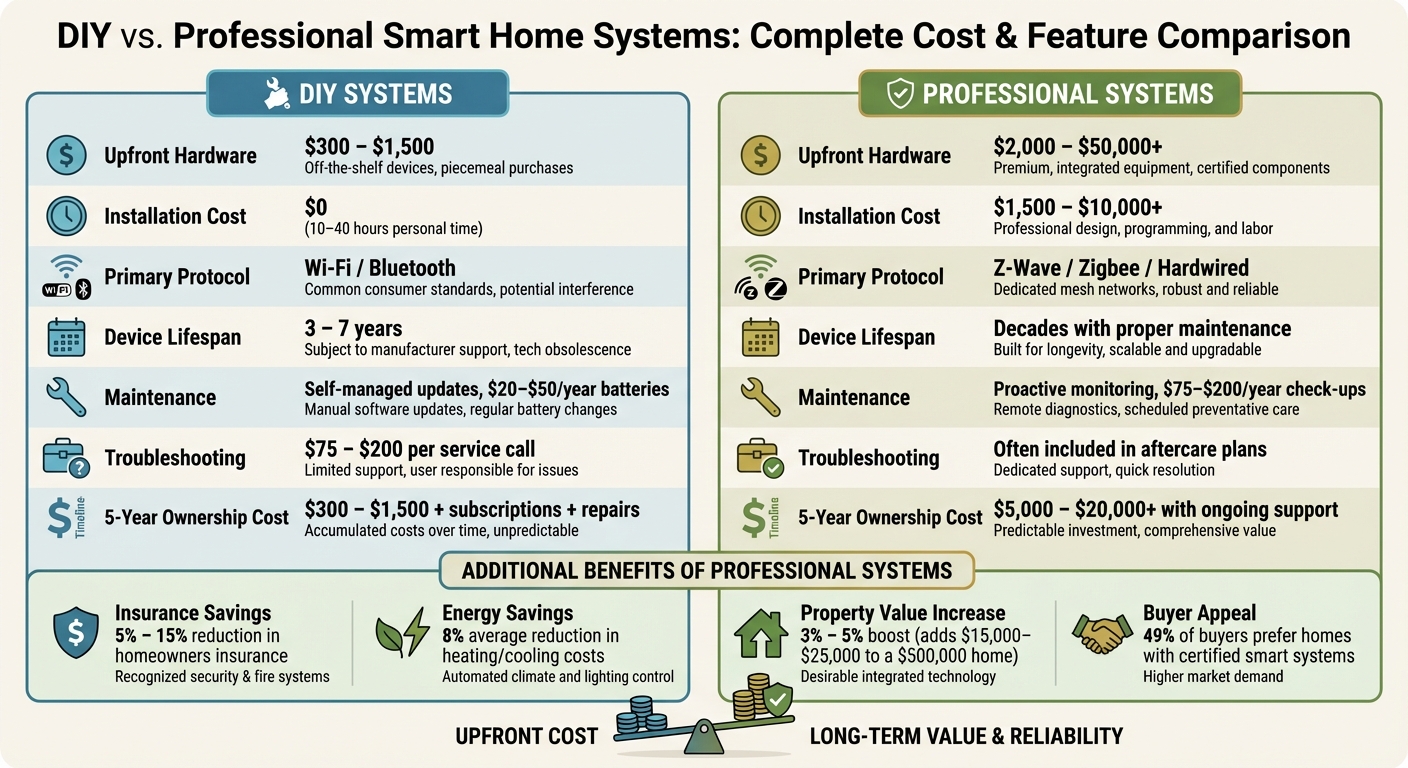
DIY vs Professional Smart Home Systems Cost and Features Comparison
Upfront Costs vs. Total Cost of Ownership
The cost difference between DIY smart home setups and professional installations is substantial. DIY starter kits generally fall between $300 and $1,500, while professionally installed systems start around $2,000 and can climb past $50,000 for fully integrated solutions [11][2].
Labor is a major factor driving up the cost of professional installations, often accounting for 30% to 60% of the total budget [11]. Professional integrators typically charge $80–$150 per hour, while electricians handling high-voltage work charge $40 to $100 per hour. Networking tasks performed by low-voltage technicians range from $60 to $90 per hour [11].
To put this into perspective, consider a mid-range installation for a 2,200-square-foot home. The total cost was $4,150, with labor alone – 24 hours at $90 per hour – adding up to $2,160 [11].
DIY systems eliminate labor fees but require a significant time investment, often between 10 and 40 hours [11].
While DIY systems may seem more affordable upfront, professional systems often deliver greater reliability and performance over the long haul. Consumer-grade devices typically last 3 to 7 years, whereas professionally installed systems are built to last decades with proper maintenance [10][5]. Additionally, troubleshooting DIY setups can incur costs of $75 to $200 per service call [5].
This breakdown highlights the trade-off between the initial investment and the long-term benefits of professional systems.
Comparison Table: Key Metrics
Here’s a side-by-side comparison for clarity:
| Metric | Low-Cost DIY | Professional-Grade |
|---|---|---|
| Upfront Hardware | $300 – $1,500 | $2,000 – $50,000+ |
| Installation Cost | $0 (10–40 hours personal time) | $1,500 – $10,000+ |
| Primary Protocol | Wi-Fi / Bluetooth | Z-Wave / Zigbee / Hardwired |
| Device Lifespan | 3 – 7 years | Decades with proper maintenance |
| Maintenance | Self-managed updates, $20–$50/year batteries | Proactive monitoring, $75–$200/year check-ups |
| Troubleshooting | $75 – $200 per service call | Often included in aftercare plans |
| 5-Year Ownership Cost | $300 – $1,500 + subscriptions + repairs | $5,000 – $20,000+ with ongoing support |
Professional systems come with additional financial perks. For instance, professionally monitored security systems can lower homeowners insurance premiums by 5% to 15% [10][12][5]. Smart thermostats also contribute to savings, cutting annual heating and cooling costs by an average of 8% [10][13]. These ongoing savings can help offset the higher upfront costs.
For those in Northern New Jersey, companies like One Sound Choice (https://onesoundchoice.com) specialize in expert installations, offering reliable, professional-grade systems that maximize long-term value.
How to Decide on Your Smart Home Investment
When planning your smart home investment, it’s essential to consider your home’s size, your specific needs, and your lifestyle. These factors will guide you in making decisions that align with your goals and ensure a worthwhile investment.
What to Consider: Home Size, Needs, and Lifestyle
The size and layout of your home play a big role in determining the scope of your smart home system. A medium-sized home (3–5 rooms) typically requires 6–12 devices, while larger homes may need 13–25 or more. In these cases, a strong, enterprise-grade network is often more reliable than consumer-grade routers. As the Home Technology Association advises:
"If you are going to splurge anywhere, splurge on the home network. Your family will thank you" [6].
When deciding which systems to prioritize, focus on those that impact daily comfort and safety, such as smart lighting, climate control, and security systems [6]. Entertainment features like home theaters or gaming setups are great additions, but they tend to be used less frequently. For major renovations or new homes, technology budgets usually range between 4% and 8% of the home’s total value [6].
Your lifestyle is another critical factor. For frequent travelers, professional security monitoring is a must. If you work from home, a dependable network and efficient climate control are key. Families with teenagers might see value in creating gaming spaces with optimized networks. Clearly identifying your needs – whether it’s energy efficiency, accessibility for aging in place, or high-quality audio – can help you avoid spending on unnecessary features [6].
Once you’ve assessed your home’s needs, the next step is to work with professionals who can create a system tailored to your lifestyle.
Working with Trusted Advisors
To get the most out of your smart home investment, it’s wise to consult a trusted advisor. These professionals can help you prioritize essentials like network strength and system compatibility. With 63% of homeowners preferring certified professionals and 49% of buyers favoring tech-certified homes, working with an expert ensures your investment aligns with your goals [1][4]. They also help prevent costly mistakes, such as buying devices that aren’t compatible with each other.
Smart home technology can boost property value by 3% to 5%, which could add $15,000 to $25,000 to a $500,000 home [9]. Professional installation not only enhances this value but also provides ongoing support to keep your system running smoothly.
For homeowners in Northern New Jersey, One Sound Choice offers expert consultation and installation services. With over 30 years of experience and more than 2,500 successful installations, they specialize in creating integrated systems tailored to families’ needs. From enterprise-grade networking to security, lighting, and entertainment, their solutions come with ongoing support to keep your system reliable and up to date.
A trusted advisor will also help you manage your budget effectively. They often recommend starting with a strong network foundation and expanding in phases. Setting aside 10% to 20% of your budget for unexpected costs [14] ensures you’re prepared for surprises. They also design systems that can grow with your needs, avoiding the expense of a complete overhaul down the line [5].
Conclusion: Choosing Quality for Long-Term Value
When it comes to smart home technology, focusing on long-term value often proves to be the wisest choice. While low-cost DIY systems might seem appealing at first, they often come with hidden drawbacks – frequent replacements, troubleshooting headaches, and potential security risks. In contrast, professional systems may require a larger initial investment, but they offer greater reliability, enhanced security, and savings that last over time.
The numbers back this up. Research shows that homes equipped with professionally installed smart technology are more appealing to buyers, with 49% of potential buyers more likely to select a property featuring accredited smart systems [1]. Additionally, professional installations help avoid costly mistakes. As the Home Technology Association notes:
"Experience shows that the vast majority of homeowners that settle for cheap-priced systems get exactly what they paid for, and later regret it" [6].
The advantages of professional systems go beyond convenience. They can deliver measurable financial benefits, such as reduced utility bills through automation and robust protection against hacking with hardwired setups. These systems also safeguard your family’s privacy and security [2]. Moreover, professional installations often include ongoing support, ensuring your smart home remains up-to-date and fully functional for years to come.
For homeowners in Northern New Jersey, One Sound Choice has become a trusted partner for professionally installed smart home solutions. With over 30 years of experience and more than 2,500 successful installations, they specialize in creating custom systems that meet the unique needs of each family. From enterprise-grade networks to advanced security, lighting, and entertainment systems, their expertise ensures a seamless experience – free from the hassles of DIY.
What One Sound Choice clients say
(We received) friendly, highly competent, quick and clean installation by 1 Sound Choice. The team followed up a few weeks after completion to ask if we were satisfied with our Media Room and Home Audio System. 1 Sound Choice is truly “top shelf” – they surpassed our expectations every step of the way.
– Mr. & Mrs. Blake (1 Sound Choice client testimonials)
We were surprised with what (Ryan) took away from the conversation – even reading between the lines to put everything we wanted and needed right into his designs for us. At first, we really didn’t know who to go with; we hadn’t had any renovations to our home before. We set up a consultation and liked (Ryan) because he was personable, a good listener and knowledgeable. He asked about our wish list and gave us some ideas…which were great.
– Mr. & Mrs. Caywood (1 Sound Choice client testimonials)
One Sound Choice was our second try at finding a contractor to repair our flood-damaged home after Irene blew through in August of 2011. Our Cape Cod house has a slab foundation and the entire first floor – living room, kitchen, dining room, two bedrooms, and a bathroom – got 5 feet of water. Ryan, the owner, was highly professional from start to finish. He worked closely with us to produce a contract that was within our insurance budget, and he came in on time and on budget. In some cases, he went over and above the call of duty; for example, surprising me with some crown molding in the bathroom and dining room that I had really wanted but just didn’t have the money for. We actually had enough left to hire him to do our home theater and bedroom media center! We were so pleased to have discovered the truly good people at One Sound Choice, and hope to work with them again when we are ready to remodel our upstairs rooms.
– bethbarnhill (Houzz review)
FAQs
What are the financial advantages of choosing a professional-grade smart home system?
Investing in a high-quality smart home system can lead to substantial long-term savings. These systems are built to last, minimizing the chances of expensive repairs or replacements that often come with budget-friendly alternatives. Moreover, a professionally installed smart home setup can boost your property’s resale value, making it a wise financial decision. One Coldwell Banker survey found 81% of buyers were more likely to buy a home with smart tech.
Choosing expert design and installation also helps you sidestep the challenges that often accompany DIY or lower-cost options. This ensures your system runs smoothly and is tailored to your household’s unique needs. In the long run, this approach not only saves money but also reduces stress, all while enhancing your daily comfort and convenience.
Why are professional smart home systems more secure than DIY options?
Professional smart home systems stand out for their enhanced security features, primarily due to expert installation, advanced technology, and their connection to professional monitoring services. Unlike DIY setups that often depend on self-monitoring or local alarms, these systems link directly to monitoring centers. In the event of a break-in, fire, or other emergencies, these centers can promptly notify emergency services, leading to quicker response times and added reassurance.
Another key benefit of professional systems is the precision of their installation. Experts ensure that devices like sensors, cameras, and alarms are positioned optimally and configured correctly. This careful setup minimizes false alarms and guarantees the system operates effectively when needed. Together, these features make professional smart home systems a more reliable and secure choice compared to most DIY alternatives.
What should I think about when choosing between DIY and professional smart home installation?
When choosing between a DIY or professional smart home installation, the first thing to think about is how complex your system needs to be. DIY setups are great for straightforward devices like video doorbells or basic automation systems. However, if you’re looking for a more intricate or fully integrated setup, professional installation might be the way to go. Experts ensure your system is installed correctly, runs smoothly, and is customized to fit your home – saving you from potential hassles later.
Another important consideration is cost. DIY options are generally more affordable upfront, with installation expenses typically ranging from $100 to $300. In contrast, professional installations start at around $10,000 and can climb higher depending on the system’s complexity. While the initial investment is steeper, professional systems often provide greater reliability, enhanced security, and ongoing support – especially for larger setups designed with families in mind. Ultimately, your choice will come down to your budget, technical confidence, and how advanced you want your smart home to be.
Related Blog Posts
- How to Choose Smart Lighting for Every Room in Your Home
- Smart Home Security Systems vs Traditional Alarms: What’s Best?
- Smart Home Questions Answered: 15 Common Concerns for Families
- Enterprise-Grade Networking for Smart Homes
Want help with the plan? See our smart home page.
More questions
Is the cheapest smart home a good deal?
Not always. Cheap gear can cost more later when it breaks, drops off Wi-Fi, or needs to be replaced.
One Sound Choice, 8 Tilley Ave, Pompton Plains, NJ 07444. Call or text (973) 945-5275. We work in homes across Morris, Passaic, Bergen, Essex, Somerset, and Hunterdon counties. Written by Ryan Herd, founder of One Sound Choice.