
If you’re dreaming of a TV larger than 98 inches, MicroLED technology might be the answer. These displays range from 100 inches to an incredible 210 inches, offering cinema-quality visuals right in your home. MicroLED screens use self-emissive pixels for perfect blacks, high brightness (up to 2,000 nits), and no risk of burn-in, unlike OLEDs. Their modular design allows for customizable sizes and configurations, making them a standout choice for large home theaters or entertainment walls.
Key highlights:
- Sizes: From 100" to 210" and beyond.
- Picture Quality: True blacks, vibrant colors, and high brightness.
- Modular Panels: Expand or customize as needed.
- Durability: Long lifespan with energy-efficient performance.
- Smart Home Integration: Works seamlessly with systems like Crestron and Savant.
While installation can be complex, professional handling ensures precise alignment and integration with your smart home setup. Whether you’re after a 162-inch home theater or a flush-mounted 219-inch display, MicroLED technology transforms your living space into an entertainment hub.
TOUR AN 12,000 SQ/FT LUXURY HOME WITH 162" AWALL MICROLED! | $24.5M
sbb-itb-c5b321b
How MicroLED Technology Works: Core Features and Advantages
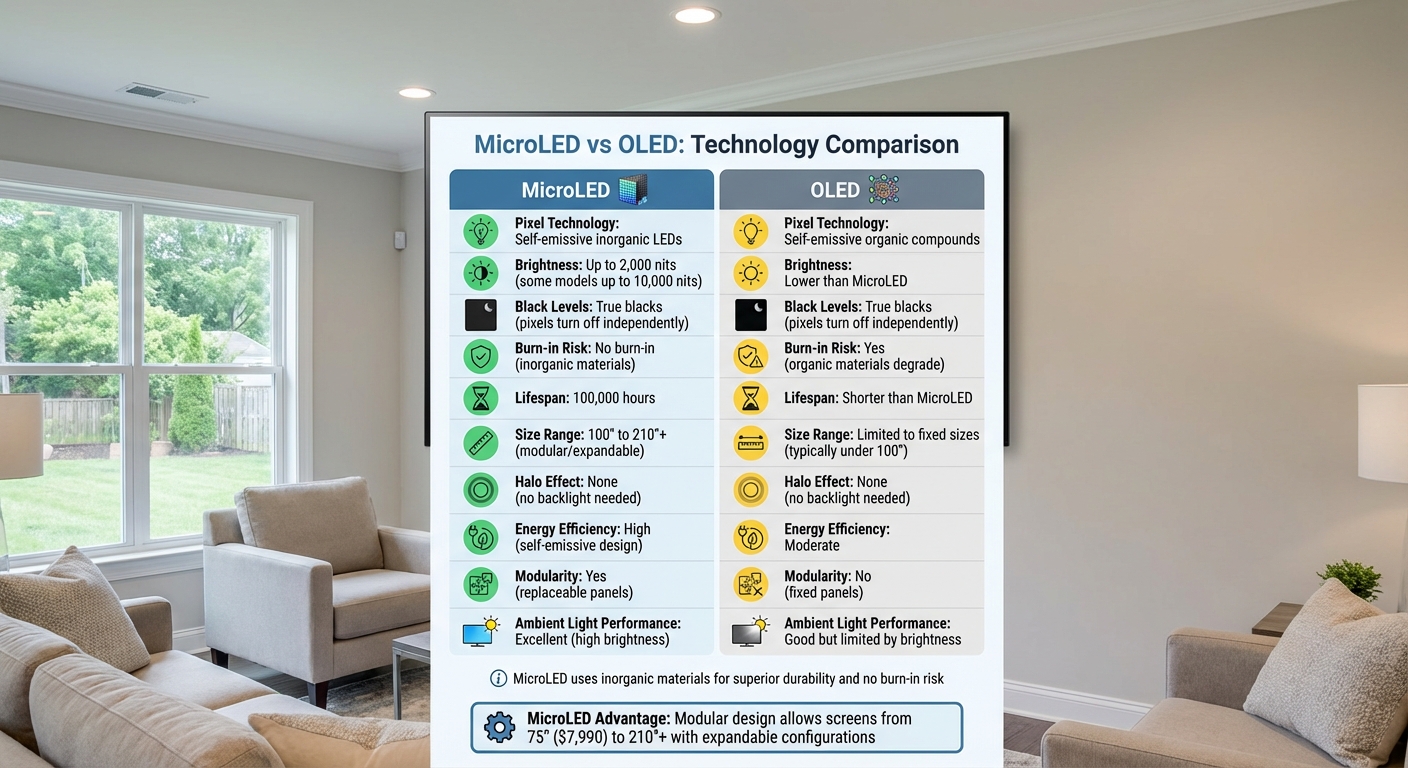
MicroLED vs OLED TV Technology Comparison: Key Specifications and Features
Self-Emissive Pixels Deliver Superior Image Quality
MicroLED displays rely on millions of microscopic LEDs that produce their own light and color. This self-emissive nature allows each pixel to turn off independently, resulting in true blacks and eliminating the halo effect often seen in LCD screens. Additionally, MicroLED can reach brightness levels of up to 2,000 nits, making it exceptionally bright[7][3][5].
This technology is particularly well-suited for spaces with high ambient light, such as sunlit living rooms or entertainment areas. It maintains vibrant colors and deep contrast regardless of the lighting conditions[7][1]. The lack of a backlight further enhances image clarity by avoiding the halo effect common with traditional displays[9].
"The emissive display tech uses tiny LEDs that feature the ability for each pixel to light up independently without the need for a backlight, allowing more precise control over the contrast."
- Nick Woodard, Digital Trends[4]
In addition to its stunning visual performance, MicroLED’s modular design offers flexibility in screen size and configuration, making it a versatile option for various spaces. LG’s new 136-inch micro LED display is one built for home cinemas.
Modular Panels Allow Custom Screen Sizes
Unlike conventional TVs with fixed dimensions, MicroLED displays are constructed from modular blocks that connect seamlessly[1][8]. These panels can be arranged in standard formats like 16:9 or 21:9, or even customized to fit unique room layouts. This modularity also allows screens to be expanded over time, providing flexibility for future upgrades[1].
As more panels are added, the resolution automatically scales to ensure consistent image sharpness. For instance, Samsung’s installations have included massive displays measuring 219, 255, and even 292 inches, all maintaining precise image quality thanks to pixel pitch measurements as tight as 0.84mm[3].
Maintenance is simplified with the ability to replace individual modules using specialized tools, ensuring minimal disruption to the overall display. This adaptability makes MicroLED an excellent choice for smart home systems, where evolving entertainment needs are common[1][8].
Long Lifespan and Energy Efficiency
MicroLED technology uses inorganic materials, which are less prone to burn-in compared to the organic compounds in OLED screens. This difference significantly extends the lifespan of MicroLED displays[10]. Samsung’s Black Seal Technology further enhances durability by creating a protective layer around each LED module, which also helps reduce heat generation[6].
"Because it creates a protective layer around each individual LED module, The Wall All-in-One also generates less heat than other direct-view LED technologies, making it more energy efficient and durable than other large-format displays."
- Davina van Buren, Samsung Business Insights[6]
This energy efficiency is especially important for professional smart home setups, where displays often run for extended periods. While a massive 160-inch screen still requires considerable power, the self-emissive design consumes less energy per square inch compared to backlit alternatives. The result is a display that delivers cinema-grade visuals while maintaining reliability and keeping operating costs manageable. This durability and efficiency make MicroLED a practical choice for high-performance home systems.
Leading MicroLED Models for Large Home Displays
Here’s a closer look at three standout MicroLED models that are reshaping the world of large-scale home entertainment.
Samsung R95H 130-Inch MicroLED TV
The Samsung R95H combines cutting-edge Micro RGB technology with an LCD panel, micrometer-scale RGB LED backlighting, and quantum dots to deliver exceptional color performance, covering 100% of the BT.2020 color gamut. Its Tizen-based Vision AI Companion enhances the user experience by offering conversational search options and personalized viewing recommendations. The TV’s sleek, bezel-free design ensures it doubles as a sophisticated focal point in any luxury living space. Additional features like AI Football Mode Pro and Multi View make it perfect for sports fans, optimizing visuals and enabling simultaneous content streams for an immersive experience [9][11]. Pricing is expected to surpass $30,000, given that the smaller 115-inch version already retails at a similar price point [11].
While Samsung sets a high bar for luxury, other brands bring their own innovations to the table.
Hisense 163-Inch RGBY MicroLED Display
Hisense’s 163-inch model takes a unique approach with RGBY pixel technology, adding a yellow subpixel to enhance both color depth and brightness. This four-color system delivers remarkably vivid and lifelike imagery, making it a strong contender for home theaters and media rooms. Its immense size and ambient-light resistance make it an excellent alternative to traditional projectors, offering vibrant visuals even in well-lit environments [1][2].
For those seeking seamless integration with smart home systems, LG offers a compelling option.
LG 136-Inch MicroLED Display
LG’s 136-inch MicroLED display boasts a 4K resolution with a 144Hz refresh rate, ensuring smooth and crisp motion for all types of content. Its AI-powered processing upscales visuals, eliminating artifacts for a refined viewing experience [6]. Designed with smart home integration in mind, this model is compatible with professional systems like Crestron and Savant, allowing it to synchronize effortlessly with lighting, shading, and security controls [7]. This makes LG’s offering ideal for those who want their entertainment system to align with a fully connected home setup.
These models showcase how MicroLED technology is redefining home entertainment, offering unparalleled performance and integration for modern living spaces.
Integrating MicroLED TVs into Professional Smart Home Systems
Why Professional Installation Matters
Installing a 130–210 inch MicroLED display is no small task and requires expert handling. These displays are built from modular tiles that need to be aligned with exceptional precision to ensure there are no visible seams. Professional installers use advanced calibration tools to guarantee uniform color and brightness across all modules, creating a flawless, unified image instead of a patchwork effect [12].
The complexity goes beyond just mounting. A 4K MicroLED screen contains approximately 8.3 million addressable LEDs, translating to over 25 million sub-pixels [2]. This density generates considerable heat, making ventilation planning critical, especially for flush-mounted or recessed setups. Some systems, like the Planar Luxe MicroLED, utilize remote video controllers. These allow heavy processing equipment to be housed in separate racks, reducing heat buildup behind the screen and simplifying cable management [7].
For large installations, the process typically takes about three days, and in most residential cases, no additional wall reinforcement is required [3]. This meticulous installation not only ensures optimal performance but also lays the foundation for seamless integration with other smart home components like lighting, audio, and security systems.
Connecting MicroLED with Lighting, Audio, and Security Systems
MicroLED displays are designed to integrate effortlessly with home automation platforms such as Crestron and Savant. This connectivity allows them to sync with lighting, shading, and security controls [7]. Advanced processors, like NovaStar, support multi-window viewing, enabling users to display security feeds, video calls, and live events simultaneously [1]. This transforms the display from a simple entertainment device into a multifunctional hub for family communication and home management.
Since most MicroLED displays don’t include built-in speakers, they are often paired with in-ceiling architectural speakers or whole-home audio systems to deliver a complete cinematic experience [3][8]. The ultra-thin profile of these displays allows them to be recessed into walls, blending seamlessly with the home’s design. Beyond entertainment, they can double as digital art frames or ambient displays, such as virtual windows showcasing nature scenes. These features can be synchronized with tunable lighting systems to create a cohesive and immersive aesthetic throughout the home [8].
Long-Term Support and System Maintenance
One of the advantages of MicroLED technology is its modular design, which enables easy maintenance. Individual tiles can be replaced using specialized suction tools, eliminating the need to dismantle the entire display [8][1]. However, this level of service requires access to manufacturer-specific support and calibration tools. For instance, Planar offers Elite Installation and Commissioning Services that ensure precise alignment and pixel-level calibration to maintain a consistent visual experience over time [7].
To ensure long-term performance, partnering with a local integration provider like One Sound Choice can be invaluable. They can offer services like heat monitoring, firmware updates, and scalable upgrades, such as adjusting the display’s aspect ratio from 16:9 to 21:9 by adding more tiles [1]. These proactive measures ensure your MicroLED display evolves with your needs, turning it into a dynamic, adaptable centerpiece for your smart home.
Designing Family Entertainment Spaces with MicroLED Displays
Configuring Modular Panels for Different Uses
MicroLED displays offer unmatched versatility, making them a game-changer for family entertainment spaces. Imagine starting with a 75-inch 21:9 cinematic display priced at $7,990, then expanding to an 81-inch 16:9 screen – or even scaling up to a massive 162-inch setup as your needs grow [1]. This modularity allows you to adapt your display to fit your evolving preferences.
Advanced processors, such as NovaStar and Samsung’s AI-powered systems, take functionality further by enabling multi-window viewing. This means you can divide the screen into sections – watching a movie on one part while keeping live sports, news, or even video calls visible on other portions [1].
With 120Hz refresh rates and Variable Refresh Rate (VRR) support, these displays deliver smooth, stutter-free visuals, even at sizes up to 210 inches [1]. Their exceptional brightness – reaching up to 10,000 nits – ensures outstanding performance in rooms with abundant natural light, such as those with skylights or glass walls. Unlike traditional projectors that require dim lighting, MicroLED displays thrive in bright, open spaces, making them a practical and stylish option for modern homes.
Wall-Mounted Installation for Clean Aesthetics
Beyond their technical prowess, MicroLED displays excel in enhancing the look of your home. Designed to mount flush against the wall, these displays create a seamless, borderless appearance, avoiding the bulky "black slab" look of traditional TVs. When not in use, the screen can showcase ambient art or serene nature scenes, transforming it into a digital canvas that complements your room’s decor [8].
High-end models like Samsung’s "The Wall All-in-One" simplify installation by incorporating control boxes, speakers, and wall brackets directly into the display. This eliminates the need for external wiring or equipment closets, delivering a clean, streamlined setup [6]. With ultra-thin profiles, these displays can even be recessed into the wall, maintaining clean sightlines and respecting the original design of your space.
Additionally, modern MicroLED displays feature matte anti-glare coatings, ensuring they remain visually stunning and easy to view, even in brightly lit environments [13]. This makes them an excellent choice for family spaces where controlling ambient light isn’t always feasible.
Working with Local Installation Experts
Installing a large-scale display like this requires expertise beyond standard TV mounting. Local integration professionals, such as One Sound Choice, bring the necessary skills to configure your MicroLED system to perfectly suit your space and needs. These experts handle precise calibration for consistent color and brightness, ensure proper ventilation to manage heat, and seamlessly integrate the display with your smart home systems, audio setup, and lighting controls.
The modular nature of MicroLED displays also allows installers to plan for future growth. You can start with a setup that fits your current space and budget, then expand later – adjusting the aspect ratio from 16:9 to 21:9 or increasing the screen size as your family’s entertainment demands change [1]. By partnering with skilled professionals, you ensure your display remains both visually stunning and functionally optimized for years to come.
Conclusion
MicroLED technology offers massive wall-sized displays starting at 98 inches, with self-emissive pixels that deliver perfect blacks, exceptional brightness, and modular designs. These displays range from a 75-inch setup priced at $7,990 to configurations exceeding 162 inches. With an impressive 100,000-hour lifespan, they promise decades of reliable performance without concerns like burn-in [15][16].
However, the precision required to align millions of microscopic LEDs makes expert installation essential. Without professional calibration, issues such as visible seams, uneven brightness, and integration challenges can arise [14].
This is why professional expertise plays a critical role.
"The Wall’s architecture and factory features reduce the need for intensive on-site calibration, so deployment is faster and installation is less costly." – Samsung Business Insights [16]
Working with experienced providers like One Sound Choice ensures your MicroLED display is seamlessly integrated with systems like lighting, audio, and security. Their expertise covers everything from ventilation and precise calibration to future scalability, such as expanding panels or adjusting aspect ratios from 16:9 to 21:9. This level of integration turns your living space into a cutting-edge, fully connected entertainment hub.
What One Sound Choice clients say
The service was timely, the process was easy and I’m very satisfied…the theatre came out phenomenal. The picture (quality) is phenomenal. The equipment (Ryan) recommended was fantastic and he was involved in the entire process (from the very beginning).
– Mr. & Mrs. Shatz (1 Sound Choice client testimonials)
Ryan listened to us – he understood what we wanted to accomplish. (The 1 Sound Choice team’s) commitment to post-installation support and service has been unbelievable. They are professionals in every aspect and have gained our trust throughout the completion of our project.
– Mr. & Mrs. Maytin (1 Sound Choice client testimonials)
We hired Ryan from One Sound Choice to install a movie theater in home we were building. His expertise was invaluable. In addition to being an informed person about every aspect of the theater, walls, insulation, lighting, seating, installation of the walls, screen and all of the equipment in the back room, he became a trusted contractor and we have complete faith in his work. Our movie theater is amazing to look at, sit in, and enjoy movies. If any work is needed as it is periodically Ryan is very reliable. Feel free to ask Ryan for photos of the room. Dr. and Mrs. Steven Stoller Saddle River, New Jersey
– ann327 (Houzz review)
FAQs
How much does it cost to install a 130–210 inch MicroLED TV?
Installing a MicroLED TV can be a major investment, with costs varying based on screen size and installation requirements. For instance, a 114-inch model can cost up to $150,000, while smaller options like the 89-inch version start at around $110,000. A mid-range size, such as 101 inches, is priced at approximately $130,000. As screen size increases, so do the expenses, particularly if the installation process is more intricate.
Can MicroLED screens be customized to fit my wall size and shape?
MicroLED screens are built with a modular approach, meaning they can be customized to fit the exact dimensions and shape of your wall. This flexibility allows them to scale up to massive sizes, reaching up to 210 inches. Their adaptability makes them perfect for delivering an immersive viewing experience right in your home.
What does my room need for a MicroLED wall (power, ventilation, wiring)?
To set up a MicroLED wall larger than 98 inches, your space needs to meet several important criteria. First, you’ll need a sufficient power supply capable of supporting the display’s significant energy requirements. Next, ensure the room has adequate ventilation or climate control to manage heat and avoid overheating issues. Lastly, professional-grade wiring is crucial for maintaining safety, ensuring reliability, and integrating the display smoothly with your home’s existing systems. For the best results and a polished appearance, professional installation is strongly advised.
Related Blog Posts
- Home Theater Design Tool
- Home Theater Design Checklist: 12 Must-Have Features
- What does a Home Theater look like in 2026
- What is the best outdoor TV?
Thinking about a 98-inch screen first? See our Sony Bravia 98-inch page.
More questions
Can a MicroLED TV get burn-in?
No. Each pixel makes its own light, so it does not burn in like some OLED screens can.
One Sound Choice, 8 Tilley Ave, Pompton Plains, NJ 07444. Call or text (973) 945-5275. We work in homes across Morris, Passaic, Bergen, Essex, Somerset, and Hunterdon counties. Written by Ryan Herd, founder of One Sound Choice.