
Outdoor audio systems often fail within a year or two due to a mix of harsh weather conditions and installation errors. In regions like Northern New Jersey, extreme temperatures, humidity, and freeze-thaw cycles can damage speakers and wiring. Poor-quality equipment, insufficient weatherproofing, and improper installation practices, such as exposed wiring or low IP-rated components, further contribute to these issues. Choosing professional-grade, weather-resistant equipment and ensuring proper installation can significantly extend the lifespan of outdoor audio systems, offering reliable performance for decades.
Poor Equipment Quality and Weatherproofing Failures
Many consumer-grade outdoor speakers, often marketed as "weather-resistant", fall short due to subpar materials and construction. These products frequently fail to protect internal electronics from moisture, debris, and corrosion, leading to performance issues. Common problems include insufficient water resistance and quick degradation under UV exposure.
Low Weatherproof Ratings
The Ingress Protection (IP) rating measures a device’s ability to resist solids and moisture. The first digit (0–6) refers to protection against solids like dust, while the second digit (0–9) indicates resistance to water [3]. For outdoor use in areas prone to heavy rain, snow, or high humidity, an IP66 rating is ideal. This level ensures maximum protection against dust and powerful water jets [3]. Without a sufficient IP rating, water can seep into the speaker, damaging the circuitry and causing the system to fail. In regions like Northern New Jersey, where weather conditions can be extreme, a minimum IP65 or IP66 rating is essential for reliable performance [3].
Beyond water resistance, prolonged exposure to sunlight presents another challenge for outdoor speakers.
UV Damage to Speaker Materials
Continuous exposure to UV rays can severely damage speaker components. Plastic housings may become brittle, while rubber parts can lose their elasticity, negatively affecting sound quality over time [1][2]. Professional-grade outdoor speakers are designed to counteract this issue by incorporating UV-resistant materials and protective coatings. These features allow them to withstand years of direct sunlight without significant wear or deterioration [1].
Recognizing the limitations of consumer-grade materials and low weatherproof ratings is key to choosing speakers that are built to endure demanding climates.
sbb-itb-c5b321b
Installation Mistakes That Cause System Failures
Even the most durable outdoor speakers can fail prematurely if installed improperly. Mistakes during installation can lead to physical damage, moisture exposure, and signal issues, all of which undermine the system’s performance. While high-quality materials are important, proper installation practices are just as critical for ensuring the longevity of your audio system.
Damaged and Exposed Wiring
A frequent error is using indoor-rated wiring for outdoor setups. Indoor cables lack protection against UV rays and water, which can cause the insulation to crack and the internal conductors to corrode when exposed to sunlight and moisture [9][3].
Another common misstep is skipping the creation of drip loops – small downward bends in the wire near entry points like speakers or buildings. Without these loops, rainwater can travel along the cable directly into connection points, leading to corrosion and short circuits [10]. To combat this, professional installers use silicone caulk to seal all entry points. As Norm from Crutchfield explains:
"You can’t ‘goop’ too much [caulk]… I also run a bead along the top seam of the bracket, to further eliminate any route for moisture to get into the installation" [7].
Faulty Connections and Signal Problems
Properly securing connection points is essential to avoid audio interruptions. Poor termination practices can increase resistance and lead to signal loss, which degrades sound quality over time. Additionally, exposure to humidity can oxidize wire ends and terminals, causing high resistance that results in distorted audio or complete silence [4][11]. Loose connections can also create vibrations that damage components and weaken solder joints, leading to intermittent signal dropouts [13][11]. In regions with harsh weather, such as Northern New Jersey, these problems are often magnified, making secure connections a top priority.
Another frequent issue is routing speaker wires too close to electrical lines. Running cables parallel to high-voltage AC lines or motors can cause electromagnetic interference (EMI), leading to annoying hums and buzzes [8]. To reduce this risk, speaker wires should be kept at least 12 inches away from electrical conduits [8]. If crossing power lines is unavoidable, wires should intersect at a 90-degree angle rather than running parallel.
Using the wrong wire gauge for long runs is another common mistake. For distances over 50 feet, 14-gauge or 12-gauge wire is recommended [8][9]. Thinner 16-gauge wire increases resistance, which weakens the signal and results in lower volume and reduced clarity. Professional installers account for these factors and select the right materials from the start. As Norm aptly points out:
"Wire’s cheap. Labor is not" [7] – a reminder that investing in the correct materials upfront saves time and money on troubleshooting later.
Expert installation addresses these challenges by ensuring proper cable management, secure connections, and thoughtful wire routing. Professionals also verify polarity, use multimeters to test continuity, and confirm that the amplifier’s power output aligns with the speaker’s capacity [11][12]. These meticulous steps can mean the difference between a system that lasts for decades and one that fails within a couple of years.
Climate and Power Issues in Northern New Jersey
Northern New Jersey’s climate and inconsistent power supply bring unique challenges to outdoor audio systems, often affecting their durability and performance.
Damage from Seasonal Weather Changes
The region’s climate exposes outdoor audio equipment to significant wear and tear due to extreme seasonal variations. With freezing winters and hot, humid summers, materials deteriorate faster than many homeowners expect.
Freeze–thaw cycles are especially harmful. When moisture infiltrates speaker enclosures or wiring, it expands as it freezes, leading to cracked housings and broken seals. As the weather warms, this process accelerates corrosion at connection points, ultimately degrading audio quality [12][4]. As one expert put it:
"A regular speaker left outside won’t survive a season. Landscape audio components are built to last years." – The Deck Expert [14]
In coastal areas like Monmouth County, salt in the air adds another layer of difficulty. Salt exposure speeds up metal oxidation, causing speaker terminals and wire connections to corrode much faster than they would in inland environments [2]. Standard "outdoor use" equipment often fails within a year or two because it isn’t designed to handle this combination of salt, humidity, and temperature extremes.
High humidity also impacts sound performance. Frequencies above 2 kHz are particularly vulnerable to signal loss [6]. On hot summer days, temperature gradients near the ground can bend sound waves upward, reducing audio clarity at listener level on patios or decks [14].
These environmental pressures highlight the importance of investing in outdoor audio systems specifically engineered to withstand Northern New Jersey’s challenging conditions.
Power Surges and Electrical Instability
Power-related issues further threaten the performance of outdoor audio systems. Amplifiers and power supplies are particularly sensitive to voltage fluctuations, which can quickly damage delicate electronics [14].
Corrosion caused by high humidity increases resistance at electrical connections, which can lead to shorts and damage amplifiers [12][4]. Northern New Jersey’s persistent moisture makes these problems more likely.
Professional installations mitigate these risks by placing amplifiers and power components in weatherproof enclosures. These enclosures protect against humidity and temperature fluctuations, extending the lifespan of the equipment [14]. For larger systems, telemetry tools can monitor loudspeaker temperature and impedance in real time, helping to identify and address electrical issues before they cause system failure [6].
How to Build Outdoor Audio Systems That Last
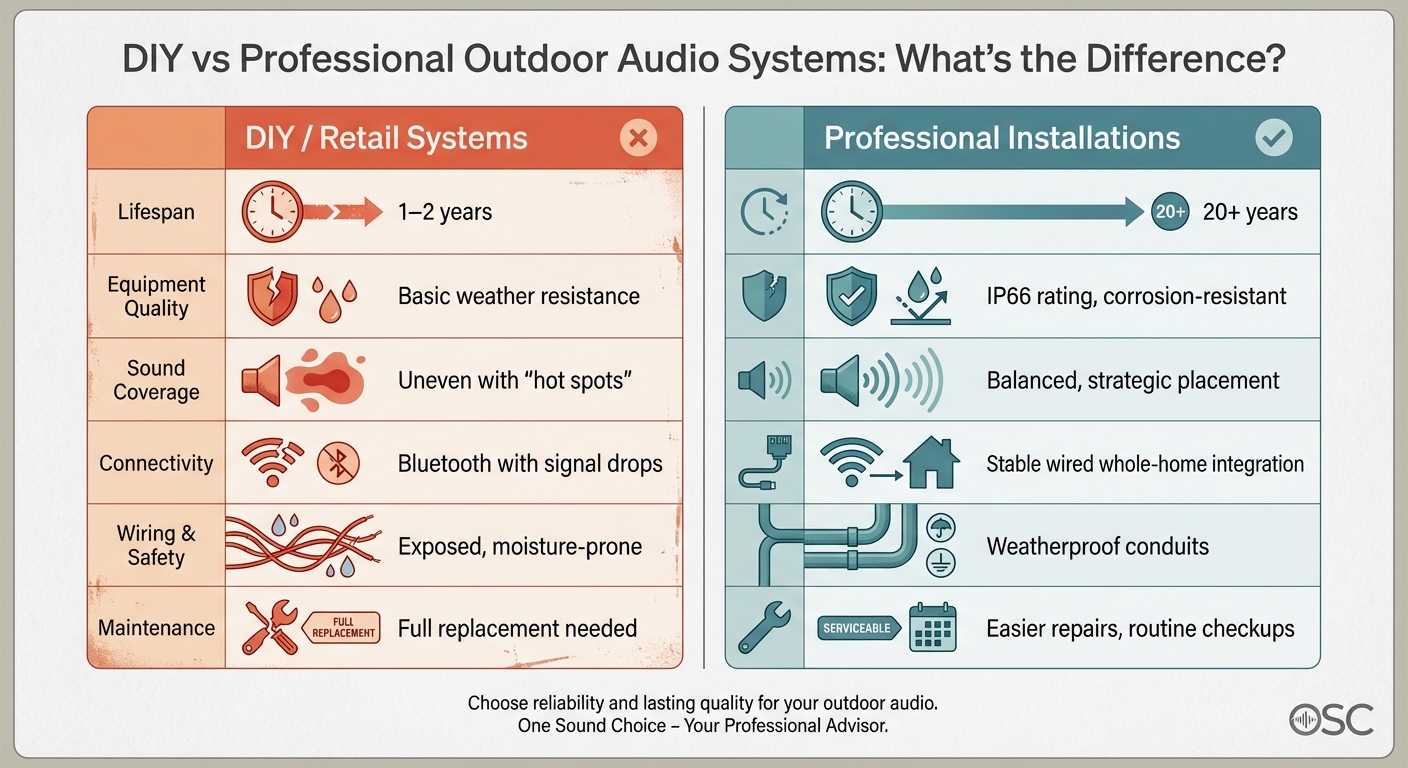
DIY vs Professional Outdoor Audio Systems Comparison
Constructing an outdoor audio system that can endure Northern New Jersey’s harsh climate requires careful planning and the right components. Here’s how to create a setup that stands the test of time.
Use Professional-Grade Weatherproof Equipment
The difference between a system that lasts and one that doesn’t often comes down to the quality of materials and engineering. Professional outdoor speakers are built with high IP ratings (up to IP66), offering superior protection against water and dust [3].
Unlike their indoor counterparts, outdoor speakers are designed to direct sound toward specific areas, cutting through background noise like wind and traffic. These systems also incorporate UV-resistant and corrosion-proof materials, ensuring they can handle constant exposure to the elements. Some even include landscape speakers and underground subwoofers, which not only protect the equipment but also blend seamlessly into your outdoor environment.
"Outdoor speakers and components must be built to withstand rain, humidity, extreme temperatures, and UV exposure. Look for weatherproof and corrosion-resistant materials to ensure long-term performance." – GMI Automation [1]
For reliability, wired connections are the preferred choice. Professional installations use hardwired setups that integrate with whole-home audio systems, allowing access to a variety of music sources via weatherproof controls or mobile apps. This approach ensures both durability and consistent performance, even in challenging weather conditions.
Why Professional Installation Matters
Even the most advanced equipment can fail if not installed correctly. Professional installers ensure speakers are placed at the right height and spaced evenly to deliver consistent sound across your outdoor area.
They also safeguard wiring by running cables through weatherproof conduits, protecting them from moisture and extreme temperatures. Amplifiers and power components are housed in secure enclosures to shield them from humidity and electrical fluctuations.
"A professional can link your outdoor speakers to your multi-room audio system, giving you access to all the same sources you enjoy indoors." – aciexperts [3]
Proper installation goes beyond placement. Professionals match amplifiers to speakers, preventing distortion and extending the lifespan of your equipment. By fine-tuning crossover settings, they ensure each speaker handles only the frequencies it’s designed for, reducing the risk of overheating and damage. This level of expertise directly addresses the common failures that can compromise long-term reliability.
DIY Systems vs. Professional Installations
In Northern New Jersey’s demanding weather, professionally installed systems significantly outperform DIY setups:
| Feature | DIY / Retail Systems | Professional Installations |
|---|---|---|
| Lifespan | 1–2 years | 20+ years |
| Equipment Quality | Basic weather resistance | IP66 rating, corrosion-resistant |
| Sound Coverage | Uneven with "hot spots" | Balanced, strategic placement |
| Connectivity | Bluetooth with signal drops | Stable wired whole-home integration |
| Wiring & Safety | Exposed, moisture-prone | Weatherproof conduits |
| Maintenance | Full replacement needed | Easier repairs, routine checkups |
High-quality professional systems, especially passive (wired) ones, can last over 20 years. In contrast, active (wireless) systems often fail sooner due to their more complex components. While DIY systems might seem cost-effective upfront, the repeated expense of replacing failed equipment adds up. Professional installation offers a more reliable, long-term solution, ensuring consistent performance despite Northern New Jersey’s tough seasonal conditions.
Conclusion
Examining equipment quality, installation techniques, and the challenges posed by local weather highlights why so many outdoor audio systems fall short. Failures often stem from using consumer-grade gear, poor installation practices, or inadequate weatherproofing. In Northern New Jersey, where winters are freezing, summers are humid, and temperatures frequently fluctuate, basic speakers and exposed wiring simply can’t handle the elements. On the other hand, systems built with professional-grade components can deliver dependable performance for 20 years or more [5].
Passive wired speakers tend to outlast active wireless ones because they avoid the internal electronics that are prone to damage. Keeping speaker volumes moderate and running underground wiring in weatherproof conduits helps reduce mechanical wear and moisture exposure. Additionally, using properly matched amplifiers and fine-tuned crossover settings prevents the common failures seen in DIY setups.
Working with a professional integrator ensures your outdoor audio system is customized for your property’s unique acoustics and the tough climate of Northern New Jersey. With access to high-quality, IP66-rated equipment [3], you gain the advantage of expert installation and ongoing support, ensuring your system continues to perform year after year. Instead of dealing with seasonal replacements, you’re making a one-time investment in a durable, long-lasting solution.
With over 30 years of experience in residential technology, One Sound Choice is equipped to deliver exceptional results. Serving Northern New Jersey homeowners, the team designs outdoor audio systems that not only enhance your property but also eliminate the frustration of frequent repairs. From the first consultation to installation and long-term maintenance, every component is chosen and installed to meet the highest standards of performance and durability.
Choosing professional-grade equipment and expert installation is the key to reliable, long-lasting outdoor audio in Northern New Jersey. It’s not just about better sound – it’s about ensuring your investment stands the test of time, providing peace of mind and consistent performance for decades to come. Why settle for recurring failures when you can enjoy a system built to last?
What One Sound Choice clients say
(We received) friendly, highly competent, quick and clean installation by 1 Sound Choice. The team followed up a few weeks after completion to ask if we were satisfied with our Media Room and Home Audio System. 1 Sound Choice is truly “top shelf” – they surpassed our expectations every step of the way.
– Mr. & Mrs. Blake (1 Sound Choice client testimonials)
We were surprised with what (Ryan) took away from the conversation – even reading between the lines to put everything we wanted and needed right into his designs for us. At first, we really didn’t know who to go with; we hadn’t had any renovations to our home before. We set up a consultation and liked (Ryan) because he was personable, a good listener and knowledgeable. He asked about our wish list and gave us some ideas…which were great.
– Mr. & Mrs. Caywood (1 Sound Choice client testimonials)
I hired 1 Sound Choice to do a surround sound system in my living room and multi-room audio in 5 other rooms in my house,I asked Ryan to make it simple for my wife and I to use and we didnt want to see any wires or equiptment.Ryan ( the owner of 1 Sound Choice) presented me with a awesome solution for what I asked for at a price point that was right in range of my budget.The project was done faster then estimated and the workmanship of Ryan and his crew was above and beyond what I expected, They worked clean and were very personable, I would HIGHLY reccomend everyone to use 1 Sound Choice for all A/V installations. I will definately be using them again!
– kgrecco75 (Houzz review)
FAQs
What IP rating should outdoor speakers have?
Outdoor speakers need an IP65 or higher rating to handle exposure to the elements. This rating ensures they are resistant to dust and water jets, making them well-suited for outdoor use. With this level of protection, your speakers can endure harsh conditions while continuing to perform reliably.
How can I tell if my wiring is the real problem?
To determine if the wiring is causing problems, start by examining it for signs of corrosion, loose connections, or physical damage. Even if a continuity test indicates the wiring is unbroken, issues like corrosion or worn-out wires can still disrupt power flow, leading to problems such as distorted or missing audio. Make sure the wiring is capable of delivering sufficient power. If necessary, consider switching to high-quality, weather-resistant cables to minimize the risk of future issues.
Is wired outdoor audio more reliable than wireless?
Wired outdoor audio systems tend to perform better for long-term use. They provide stable and consistent signals, ensuring minimal interference and lower latency. This stability often results in superior sound quality, which is especially important in outdoor settings. While wireless systems are simpler to set up, they can encounter challenges such as signal loss, interference, and power limitations, all of which can affect their overall performance. For those prioritizing durability and reliable sound, wired systems are often the preferred option.
Related Blog Posts
- Outdoor Entertainment Setup: 8 Ideas for Your Backyard
- How to create a outdoor oasis with audio and video.
- “How Do We Get Music Outside Without It Sounding Cheap or Being Too Loud?”
- “What’s the Right Way to Add Outdoor Audio Around a Pool?”
Does your music also cut out in the yard? See our why Sonos cuts out outside page.
More questions
Does cold weather hurt outdoor speakers?
It can. Freeze and thaw, wet air, and sun wear down cheap speakers and wires. Gear made for outdoor use holds up much longer.
One Sound Choice, 8 Tilley Ave, Pompton Plains, NJ 07444. Call or text (973) 945-5275. We work in homes across Morris, Passaic, Bergen, Essex, Somerset, and Hunterdon counties. Written by Ryan Herd, founder of One Sound Choice.