The Sun Gets Lower. The Glare Gets Worse.
In late summer and fall, the sun sits lower in the sky. If your windows face the wrong way, that light can come straight into the room.
You may notice it on the TV first. The screen looks washed out. You close a curtain or move to another seat. A motorized shade gives you a cleaner way to control that light when you need it.
Control the Sun Without Giving Up the Window.
The goal is not to keep the shades closed all day. It is to use the right shade at the right time. Bring it down when the sun is a problem. Raise it when you want the light and the view back.
☀️ Cut the glare
Block or soften the light when it hits the TV or your eyes.
🌡 Help with direct sun
Keep strong sun off the room, floors, furniture, and seating area.
🔒 Add privacy
Lower the shades when it gets dark and you do not want people looking in.
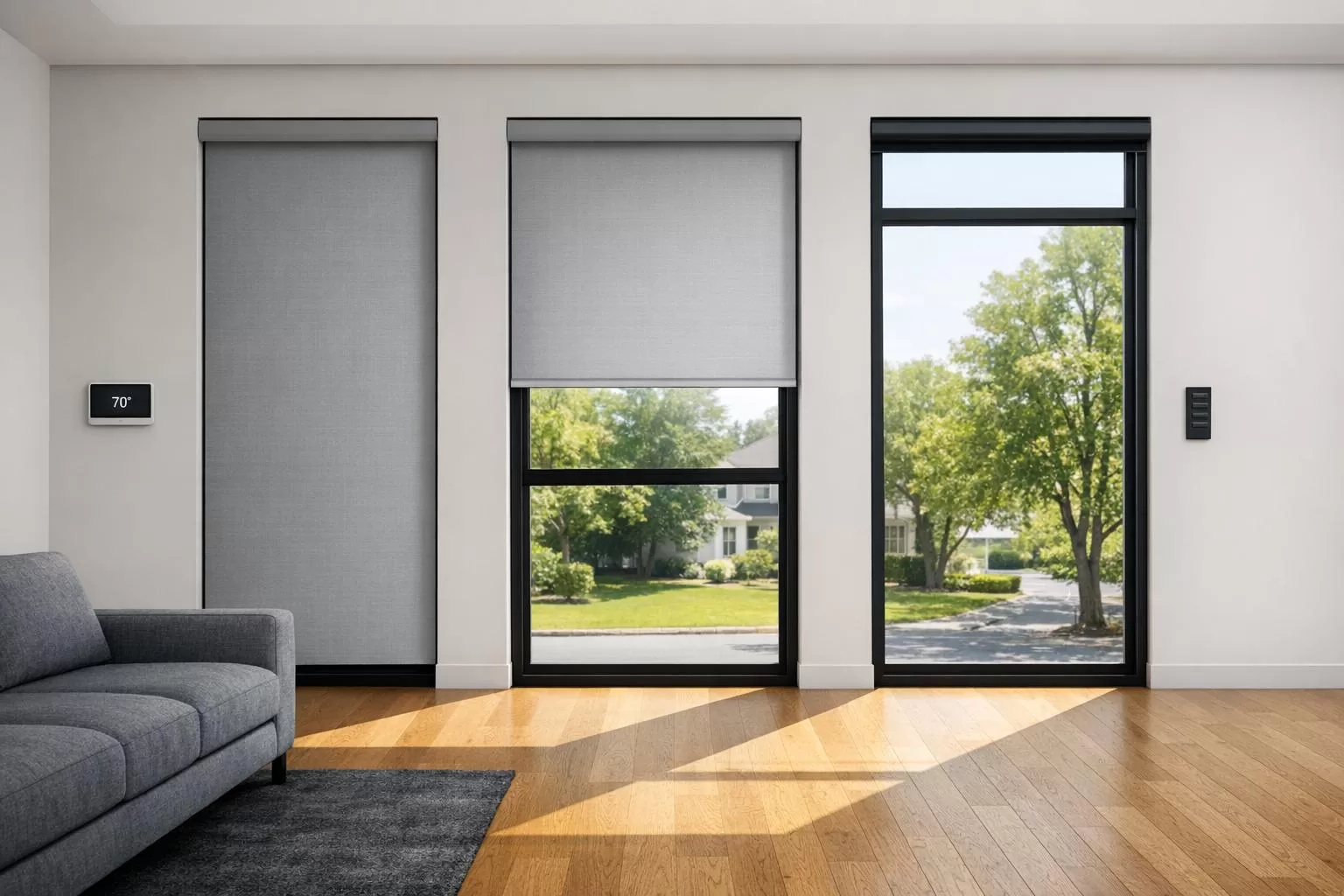
Not Every Shade Does the Same Job.
The fabric matters. Some shades are made to soften bright sun and keep part of the view. Others are made to give more privacy. Blackout shades are used when you want the room much darker.
Sheer / Solar
Good when you want to cut glare and bright sun but still see outside.
Privacy / Light Filtering
Lets some light into the room while giving you more privacy.
Blackout
Used when you want to block much more light for a bedroom, theater, or TV room.
This is why I want to see the room first. The best fabric for a family room may not be the best fabric for a bedroom or outdoor space.
One Shade Is Easy to Pull. Ten Shades Are Not.
Manual Shades
A hand-pulled shade can be fine on one small window.
Motorized Shades
Motorization makes more sense when you have large glass, tall windows, many windows, or want the shades to work together.
The Motor Is Only One Part of the Job.
A good motorized shade system needs the right fabric, motor, power, mounting, control, and finish. Those choices are different from house to house.
Power
Some systems are wired. Some indoor shades can use battery power. Existing homes may have more than one good option.
Control
Use a wall button, remote, app, or smart home system. The goal is to make the shade easy for everyone to use.
Fit & Finish
The roller, pocket, fascia, fabric, and bottom bar should fit the room instead of looking like an add-on.
The Shades Can Work With the Rest of the Room.
If you already have Control4, the shades can become part of the same system when compatible products are used.
TV Time
Lower the shade and set the room for TV with one scene.
Good Morning
Raise the shades when the day starts.
Privacy
Lower the shades later in the day or on a set schedule.
An Outdoor Shade Is Not Just an Indoor Shade Put Outside.
Outdoor spaces need hardware made for outdoor use. The shade may use side tracks, zipper tracks, or cable guides to help hold it in place. The motor, fabric, mounting, and wind exposure all need to be part of the plan.
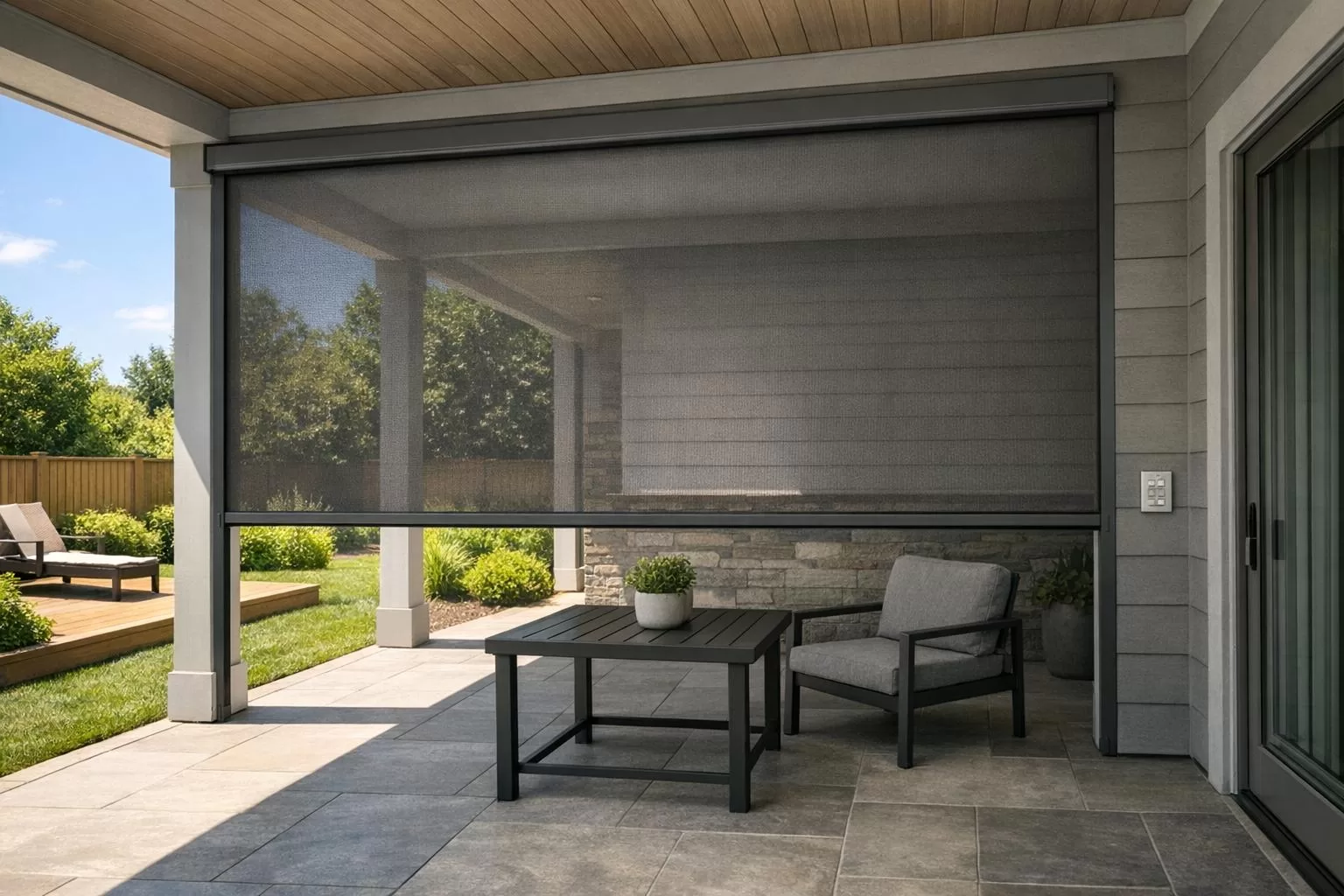
Good places for outdoor shades
The goal is simple: block the sun when it is a problem and open the space back up when it is not.
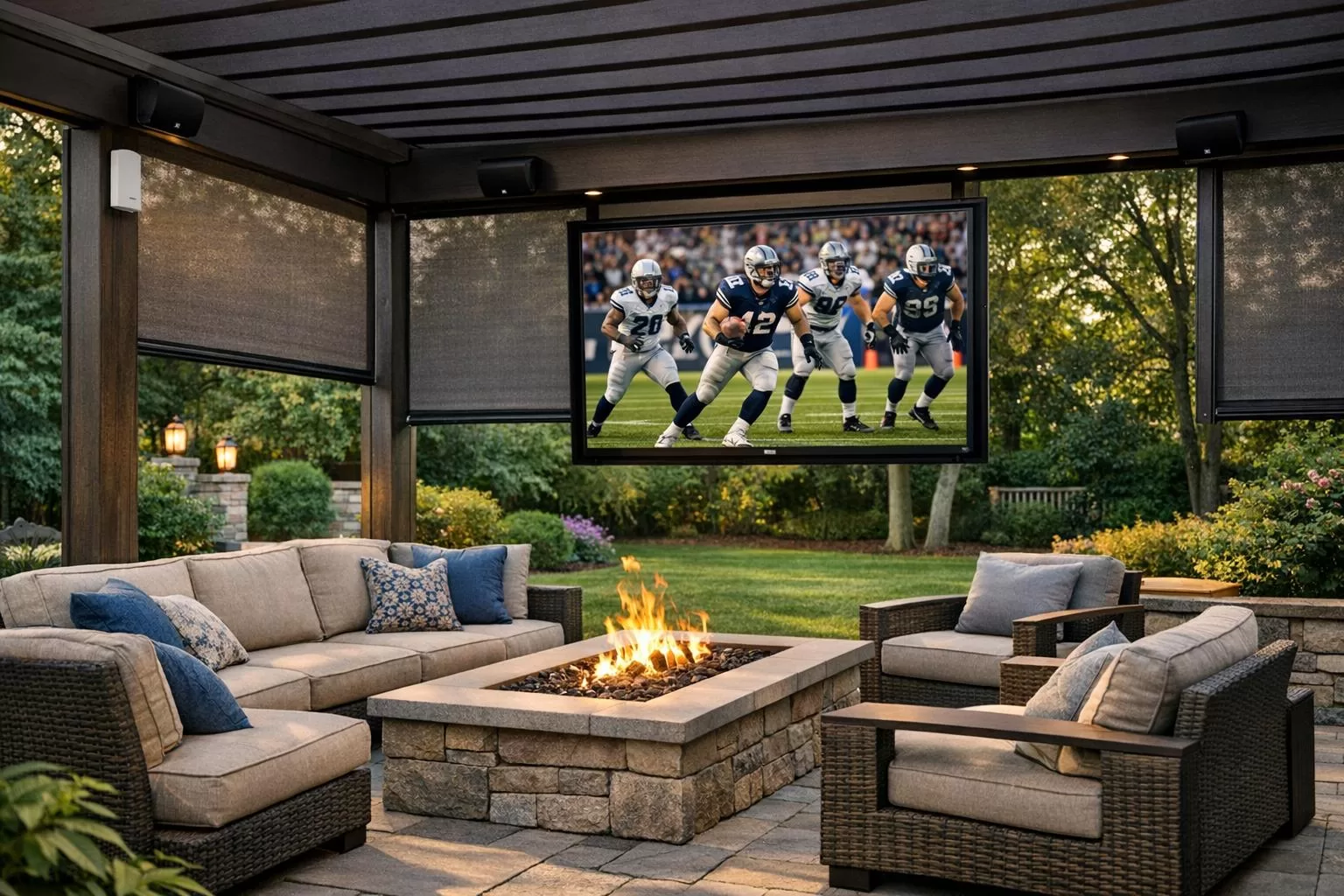
Big Outdoor TV? The Sun Still Matters.
A bright outdoor TV is made to fight the sun, but a low side angle can still make the space less comfortable. A motorized shade can stop the late-day sun before it reaches the seating area and screen.
What Ryan Looks at Before Recommending a Shade
There is no honest one-size-fits-all shade. The room and window decide what makes sense.
Sun Direction
Where does the sun come in? What time is it the worst?
Window Size
How wide and tall is the glass? Is the window easy to reach?
The Job
Do you want less glare, more privacy, a darker room, or all three?
Power & Control
Can we wire it? Does battery power make sense? Should it work with Control4?
You May Not Need Them on Every Window.
Sometimes one bad window causes the whole problem. Other homes have walls of glass where several shades should move together.
Large Windows
Big glass can bring in a lot of sun and can be hard to cover by hand.
High Windows
Motorized shades make hard-to-reach windows simple to use.
Many Windows
Move a whole wall of shades together instead of pulling each one by hand.

Ryan Herd — Making Home Technology Simple for More Than 30 Years
Ryan started One Sound Choice more than 30 years ago and has worked in thousands of New Jersey homes.
For shades, he looks at the glass, sun, room, wiring, control, and what you want the shade to do. Then he tells you what makes sense.
Clear Advice. Clean Work. Easy to Use.
Serving Homeowners Throughout Northern New Jersey
One Sound Choice works in existing homes, family rooms, bedrooms, offices, media rooms, patios, porches, gazebos, and outdoor TV spaces.
Motorized Shades — Common Questions
Can motorized shades help with TV glare?
Yes. They can block or soften bright light that shines through the glass and onto the TV.
What is the difference between light-filtering and blackout shades?
Light-filtering shades soften bright light and can keep some view outside. Blackout shades block much more light and are better when you want the room dark.
Do motorized shades need wires?
Not always. Some systems are wired. Some indoor shades can use battery power. Ryan will look at the window and tell you what makes sense.
Can they work with Control4?
Yes. Compatible shades can work with Control4 so the shades, lights, and TV can be part of one scene.
Can motorized shades work outside?
Yes, but outdoor shades use hardware made for outdoor use. The fabric, motor, tracks, guides, mounting, and wind exposure all matter.
Can the shades move on their own?
Yes. Compatible systems can move at set times or as part of a smart home scene.
Do I need shades on every window?
No. Sometimes one or two windows cause the whole problem. Ryan will look at the room and tell you where he would start.
How do we get started?
Text Ryan a photo of the window and TV at (973) 945-5275. Tell him what time the sun is the worst.
Start With a Photo of the Window.
Text Ryan a photo of the window and TV. Tell him what time the sun is the worst. He will look at the space and tell you where he would start.